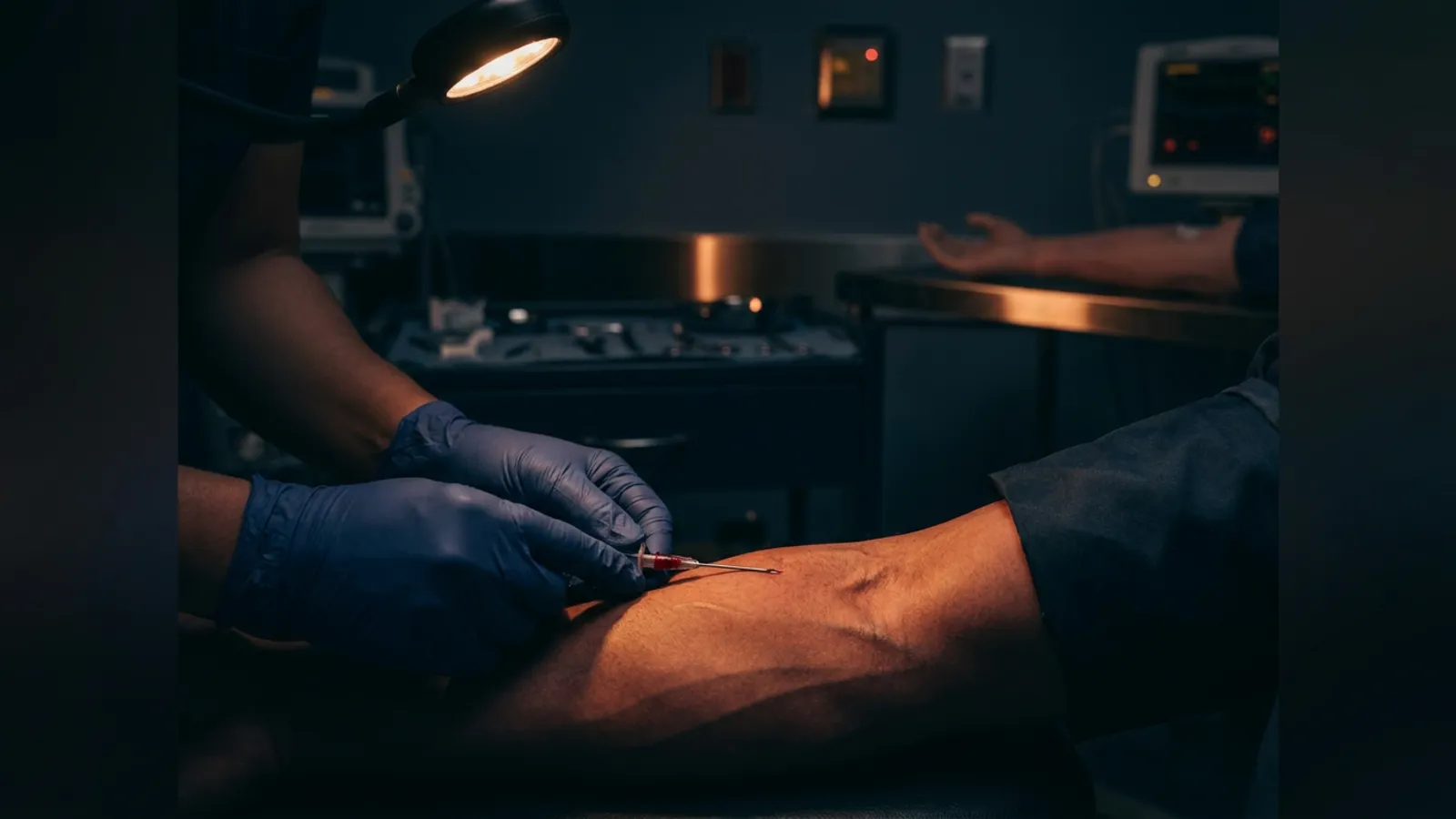
Pick the wrong gauge and you can do everything else right and still lose the stick. The vein blows. The flow rate undershoots the order. The dwell time falls short of the therapy. You stand there with a kit in your hand and a patient who now trusts you a little less. IV catheter size selection is one of the smallest decisions in clinical practice and one of the most consequential.
The good news is that gauge selection is a habit, not a memorization exercise. Once you understand what each gauge actually does at the bedside, the choice becomes obvious in the few seconds you have between assessing the vein and reaching for the kit.
This guide walks through the gauge chart, the clinical decision framework that VeinCraft Academy instructors teach, and the small adjustments that separate confident providers from the ones who default to the same catheter for every patient.
What is IV catheter size selection?
IV catheter size selection is the clinical decision of matching catheter gauge and length to the patient's vein caliber, the therapy ordered, the flow rate required, and the expected dwell time. The smallest catheter that can deliver the therapy is generally the right choice. Larger gauges deliver fluids faster but cause more vein trauma and shorter dwell times. The decision happens in seconds at the bedside, and skilled providers run a short mental checklist every single time.
IV catheter gauge chart at a glance
The chart below is the universal gauge, color, and flow rate reference for peripheral IV catheters. Color codes are standardized across manufacturers, so the color tells you the gauge before you read the label.
| Gauge | Color | Approximate diameter | Approximate flow rate | Common clinical use |
|---|---|---|---|---|
| 14G | Orange | 2.1 mm | ~250 mL/min | Massive transfusion, trauma resuscitation |
| 16G | Gray | 1.8 mm | ~200 mL/min | Major surgery, rapid fluid resuscitation, blood products |
| 18G | Green | 1.3 mm | ~100 mL/min | Blood transfusion, surgical access, contrast for CT angiography |
| 20G | Pink | 1.1 mm | ~60 mL/min | Routine fluids and most IV medications in adults |
| 22G | Blue | 0.9 mm | ~35 mL/min | Fragile veins, elderly, smaller adult vessels |
| 24G | Yellow | 0.7 mm | ~20 mL/min | Pediatric, neonatal, sclerosed adult veins |
Bottom line. The chart tells you what each gauge can do. Clinical context tells you which one to choose.
Why the biggest gauge that fits is rarely the right one
A common reflex, especially among newer providers, is to reach for the largest catheter the vein will tolerate. The thinking is that bigger gauge means more flexibility for whatever comes next. The data say otherwise.
A post-hoc analysis published in PLOS ONE on catheter-to-vein ratio and peripheral cannulation outcomes reported substantially higher first-attempt success when the catheter occupied a smaller proportion of the vein lumen. The Association for Vascular Access standards of care recommend a catheter-to-vessel ratio at or below 45%, meaning the catheter should fill less than half of the vein's diameter. The 2024 Infusion Therapy Standards of Practice from the Infusion Nurses Society reinforce the same principle: select the smallest gauge that supports the prescribed therapy, then use the shortest catheter that still seats the tip in a healthy vein segment.
Larger catheters cause more endothelial damage, shorter dwell times, and more frequent complications including infiltration and phlebitis. If a 20G can deliver the therapy ordered, an 18G in the same vein is not "playing it safe." It is over-instrumenting a vessel that did not ask for it.
The provider who reaches for the right gauge on the first attempt earns trust the moment they open the kit. Nothing about that is showy. Patients notice it because the stick goes in clean, the line dwells, and they do not get re-stuck on shift change.
The 5-question gauge selection framework
Before you reach for a catheter, run this checklist. With repetition, it takes less than five seconds.
- What therapy is ordered? Routine maintenance fluids, antibiotics, and most piggyback medications run fine through a 22G. Blood products, vesicants, contrast for CT angiography, and rapid resuscitation push you toward 18G or larger.
- What flow rate does the order require? Match the gauge to the prescribed mL per minute, not to a hypothetical worst case. A standard maintenance rate of 100 mL per hour does not need a 16G.
- What does the vein actually look like? Palpate before you decide. A small, fragile, or rolling vein vetoes a large catheter regardless of what is ordered. If the gauge does not respect the vein, the line will not last.
- How long is the therapy planned for? A vein meant to dwell for five days deserves a smaller, gentler catheter and a forearm site. A two-hour outpatient infusion can tolerate a slightly larger gauge in a more accessible vein.
- What is the patient's age, hemodynamic status, and access history? Elderly skin, dehydration, frequent prior IVs, and chemotherapy history all push you smaller. Trauma, surgical resuscitation, and code situations push you larger.
If any of those answers conflict, the vein wins. You can always run fluids slower through a smaller catheter. You cannot un-blow a vein.
When to use each IV catheter gauge
The chart shows the spread. The notes below show the judgment.
14G and 16G
These are trauma and surgical resuscitation catheters. Use them when you need to move blood products fast, restore volume in hemorrhage, or place a line that an OR team will use for rapid infusion. Place them in the largest, most accessible vein available, typically the antecubital fossa or a forearm vein with confirmed caliber. Outside of resuscitation, you almost never need this size.
18G
The 18G is the standard for elective blood transfusion, contrast injection for CT angiography, and many operating room cases. It also serves as a workhorse in emergency departments where therapy may escalate. Choose it when you need durable flow capacity in an adult with a vein that comfortably accommodates the diameter.
20G
The 20G is the default for the majority of adult inpatients. Maintenance fluids, antibiotics, electrolytes, most piggybacks, and routine blood draws all work through a 20G in a healthy forearm vein. If you are not sure what therapy is coming next and the vein supports it, 20G is rarely the wrong answer.
22G
The 22G is your fragile-vein and small-vessel choice. Elderly patients, patients with a history of repeated cannulation, smaller adult forearms, and outpatient infusion centers all benefit from a 22G. It will deliver routine fluids and most medications without insulting the vein. For a deeper read on geriatric venous access and how vein structure changes with age, see our guide on IV cannulation in geriatric patients.
24G
The 24G is the smallest standard peripheral catheter. It is the right choice for neonates, infants, and pediatric patients, as well as adults with severely sclerosed or chemotherapy-affected veins where nothing larger will safely seat. The flow rate is limited, but a 24G that runs is infinitely better than a 22G that does not. Our pediatric IV access guide covers technique and gauge sizing across pediatric weight bands.
Catheter length matters as much as gauge
Gauge gets the attention. Length determines whether the catheter actually stays in the vein.
The Association for Vascular Access standards recommend that approximately two-thirds of the catheter length dwell inside the vein. A short catheter in a deep vein will dislodge with the first elbow flexion. A long catheter advanced through a shallow vein will perforate the back wall.
Standard peripheral catheters run from 1 inch to 1.75 inches. Patients with deeper veins, including many obese patients, often need a longer catheter (1.75 inches or longer) so that the tip lands in a healthy vein segment rather than at a valve or junction. The same logic applies to ultrasound-guided peripheral IV (UGPIV) cannulation, where target vessels often sit one to two centimeters below the skin. For deeper context on those decisions, see our guide to IV access in obese patients and the decision flowchart for when to use ultrasound for IV access.
Common gauge selection mistakes that blow your line
A handful of errors account for most preventable failures. Each one comes down to choosing without thinking.
- Defaulting to 18G for every adult. A 20G works for most maintenance therapy and protects the vein.
- Choosing 22G for blood products to "be gentle." Smaller gauges work for transfusion in some scenarios, but order requirements and institution policy come first. Read the order, then choose.
- Picking the gauge before palpating the vein. Pick a kit, palpate the vein, then decide. Reversing that order is how you commit to a catheter the vein cannot support.
- Ignoring catheter length. A 20G that is too short slides out in three hours. The right gauge in the wrong length is still the wrong line.
- Using the same catheter on a 30-year-old athlete and an 88-year-old with chemotherapy history. Skin tone, vein elasticity, and prior insults to the vasculature all change the math.
For a deeper look at the technical reasons veins fail at insertion, see our article on blown veins, causes, and prevention.
Build the decision habit, not the memorized table
The chart is a tool. The habit is the skill.
At VeinCraft Academy, our credentialed clinical instructors teach gauge selection as part of Level 1: The Method, the eight-hour intensive that builds the foundation most nursing and paramedic programs leave incomplete. Students rehearse the five-question framework on every simulation drill and every live stick, with individual coaching at a 10:1 ratio. The point is not to memorize a chart. The point is to look at a vein, hear the order, and reach for the right kit without thinking about it. That is what mastery looks like at the bedside.
For the deeper anatomy that makes gauge selection make sense, see our guide to vein anatomy for IV cannulation. For broader bedside fundamentals, see our IV cannulation tips and tricks reference.
What gauge is best for routine IV fluids?
A 20G is the standard choice for routine IV fluids in most adults with a healthy forearm vein. It supports a wide range of medications and infusion rates while respecting the vein. Drop to 22G for fragile or elderly veins. Step up to 18G only when the order or anticipated therapy calls for it.
What size IV is needed for a blood transfusion?
Most institutional policies allow 18G or 20G for adult blood transfusion, with 18G preferred when feasible. Smaller gauges, including 22G, can deliver blood safely in some clinical contexts (such as pediatrics or fragile-vein scenarios) but require slower infusion rates and confirmation against your facility's transfusion policy. Always verify with your institution's protocol before starting.
What gauge should I use for elderly patients with fragile veins?
A 22G in a forearm vein is the standard choice for most elderly patients. It respects fragile vessel walls, delivers routine fluids and medications, and tolerates a longer dwell time. Drop to 24G if vessels are visibly sclerosed or repeatedly cannulated. Avoid 18G unless the therapy ordered absolutely requires it, and even then, consider whether ultrasound guidance or escalation to a midline is the safer path.
How does the catheter-to-vein ratio change my gauge choice?
The Association for Vascular Access recommends that the catheter occupy 45% or less of the vein's lumen. If you palpate or visualize a vein on ultrasound and the chosen catheter would fill more than half the vessel, drop one gauge. The narrower catheter improves first-attempt success, reduces phlebitis, and extends dwell time. This is one of the strongest evidence-based predictors of a line that lasts.
Master the first reach
The provider who picks the right catheter on the first reach is not lucky. They have rehearsed the framework until it disappeared into instinct. That is what VeinCraft Academy trains, and it is how nurses and paramedics become the go-to person for vascular access on their unit.
If you want to make IV catheter size selection a reflex instead of a guess, with credentialed clinical instruction, live sticks on real patients, and a 10:1 student-to-instructor ratio, explore Level 1: The Method at $199 or step into advanced gauge decisions including UGPIV in Level 2: The Craft at $299. Ready to commit? Submit an enrollment inquiry. The next vein is waiting. Make sure the right catheter is in your hand.
VeinCraft Academy is a mastery-focused IV cannulation training program for healthcare professionals. All instruction is delivered by credentialed clinicians with active field experience. VeinCraft Academy is a RevivaGo Company.