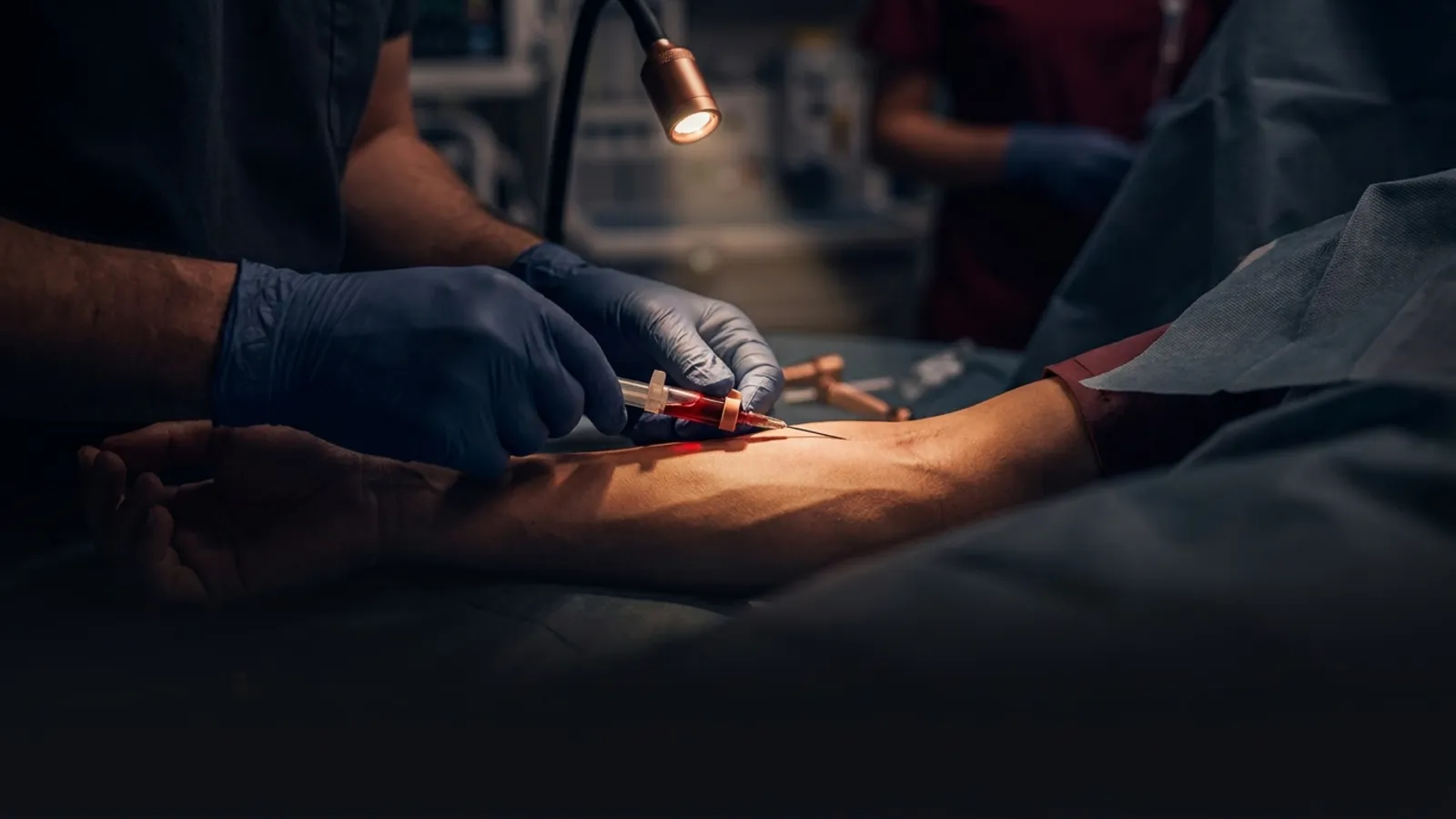
The most reliable IV cannulation tips and tricks combine pre-stick preparation, deliberate tourniquet technique, vein anchoring, a low-and-slow insertion angle, and a calm response to flash. Mastery is not about more force on the needle. It is about more control over the variables before, during, and after the stick. These twelve tips fix the most common mistakes that make easy veins look hard.
You learned a procedure in school. You have done it dozens or hundreds of times. The question this article answers is the practical one: which small changes in your routine will move your success rate from "most of the time" to "first stick, every time?"
What follows is the short list. Use what fits your practice. Pass the rest to someone newer.
Tip 1: Warm the limb before you stick
Cold veins constrict. Warm veins dilate. A simple warm compress or a warm pack across the AC for two to three minutes is one of the highest-yield, lowest-effort interventions in vascular access. If your unit does not stock warm packs, run the limb under warm water at the sink. The biggest gains come on dehydrated, hypothermic, or peripherally shut-down patients.
This is the easiest 30-second fix in cannulation, and most providers skip it.
Tip 2: Use gravity (let the arm hang)
Have the patient sit up if possible, then let the arm hang below the level of the heart for 30 to 60 seconds before applying the tourniquet. Gravity pools blood in the peripheral veins. You will feel veins appear that did not seem to exist when the arm was on the bed.
Pair gravity with warming and a tourniquet, and you have stacked three independent vein-enhancing interventions before you have touched a needle.
Tip 3: Apply the tourniquet correctly
Tourniquet placement is one of the most overlooked variables. Place it 4 to 6 inches above the planned insertion site. Tight enough to occlude venous return but loose enough to keep arterial inflow. If the radial pulse disappears, the tourniquet is too tight and you are working against yourself.
Do not leave the tourniquet on for more than 60 seconds before sticking. Hemoconcentration distorts vein appearance and makes the post-stick lab values you draw less reliable.
Tip 4: Pick the forearm over the AC
The antecubital fossa (AC) is convenient but it is not always the right choice. The forearm has straighter, more stable veins that are less likely to roll, less prone to positional occlusion, and far more comfortable for the patient over a multi-hour infusion. Default to the forearm or dorsal hand for most peripheral access. Reserve the AC for emergencies, contrast studies, or when nothing else is available.
If you have not deliberately practiced site selection, our vein anatomy guide for IV cannulation walks through the forearm-first hierarchy.
Tip 5: Anchor the vein with thumb traction
Veins roll when they are not held. Place your non-dominant thumb 1 to 2 inches distal to the planned insertion site and apply firm downward and slightly outward traction along the vein's long axis. Hold the traction throughout the stick, not just before it.
This single technique fixes the rolling-vein problem most providers blame on the patient. For patients with notoriously mobile vessels, see our deeper guide on difficult veins and rolling veins.
Tip 6: Go in low and slow (10 to 15 degree angle)
The most common insertion mistake is too steep an angle. Aim for 10 to 15 degrees from the skin surface. A steeper angle increases the risk of going through the back wall of the vein on entry. A shallow angle gives you a longer "runway" to find the vein and confirm flash before advancing.
Go slow on the entry. Speed feels like confidence but it costs you control.
Tip 7: Read flash without flinching
Flash, the visible blood return in the catheter chamber, is the most informative signal in the procedure. The mistake is treating flash like a finish line. It is a checkpoint. Flash means the needle tip is in the vein. It does not mean the catheter is in the vein.
Pause when you see flash. Breathe. Then drop the angle and advance. Our companion piece on IV flash technique and recognition covers what flash looks like in difficult cases and how to avoid the "false flash" that costs providers second attempts.
Tip 8: Advance the catheter, not the needle
After flash, the catheter still needs to enter the vein. Common mistake: continuing to push the needle deeper. Correct sequence: hold the needle stable, then advance the catheter forward off the needle. The needle stops moving the moment you have flash. The catheter does the rest of the work.
Threading the catheter while the needle keeps advancing is how you blow good veins.
Tip 9: Drop the needle angle after flash
Once you see flash, lower the needle and catheter assembly almost flat against the skin (5 to 10 degrees) before advancing further. This protects the back wall of the vein. Continuing at a 15-degree angle after flash sends the needle through the posterior wall on the next millimeter of advance.
Steep entry, flat advance. Memorize the order.
Tip 10: Stop fishing
Probing back and forth under the skin to "find" a vein after a missed stick is called fishing. Patients hate it. The vein hates it. Your success rate hates it. Pull back close to the skin (do not exit), redirect cleanly, and advance with intention. If two clean redirects do not work, withdraw and start over with a fresh site.
Fishing turns one missed stick into a multi-vein casualty event.
Tip 11: Reset before the second attempt
After a missed stick, your nervous system is in a different state than it was on attempt one. Heart rate is up. Hands are less steady. Self-talk is loud. Acknowledge it.
The professional move is a deliberate reset: one slow exhale, drop the shoulders, name the variable that made attempt one fail (rolled vein, blew the back wall, too steep), and choose a new site with intention. Our piece on the psychology of IV insertion covers this in depth, because the mental game is what most courses ignore.
Tip 12: Document what worked
After every successful stick on a difficult patient, write down what worked: site, vein, gauge, position, modifications. Your future self (and the next nurse) will thank you. After every miss, write down what failed and why.
A two-line note in the patient's chart is the cheapest professional development tool in nursing.
Bottom line: what to change before your next shift
| Variable | Common mistake | Better approach |
|---|---|---|
| Warming | Skipped | 2-3 minutes warm pack on AC |
| Limb position | On the bed | Hung below heart 30-60 seconds |
| Tourniquet | Too tight, too long | 4-6 inches above site, under 60 seconds |
| Site selection | AC by default | Forearm or dorsal hand first |
| Anchoring | Light pressure or none | Firm thumb traction held throughout |
| Insertion angle | Too steep (25-30 degrees) | 10-15 degrees, then drop after flash |
| Response to flash | Keep advancing the needle | Hold needle, advance catheter |
| Missed stick recovery | Fishing | Withdraw, redirect once, then new site |
| Between attempts | Push through anxiety | Deliberate reset, name the variable |
| Post-stick | Move on | Document what worked |
Bottom line: Most missed sticks are not hard veins. They are stacked small mistakes in the controllable variables. Fix the variables and the veins get easier.
What is the easiest IV cannulation technique to learn?
The easiest reliable technique is the standard direct method on a forearm vein with thumb traction below the site, a 10 to 15 degree insertion angle, and a clear pause to confirm flash before advancing the catheter. Beginners benefit most from focusing on site selection and anchoring before chasing advanced techniques like float, modified Seldinger, or ultrasound-guided access.
What is the most common mistake during IV cannulation?
The most common mistake is too steep an insertion angle combined with continuing to advance the needle after flash. Both errors blow through the back wall of the vein. The fix is conscious: enter at 10 to 15 degrees, stop the needle the moment you see flash, drop the angle nearly flat, then advance the catheter alone.
How can I improve my IV cannulation success rate?
Improve your success rate by stacking the controllable variables before the stick: warm the limb, use gravity, place the tourniquet correctly, anchor with thumb traction, choose the forearm over the AC, go in shallow and slow, and pause for flash. Most providers focus on the needle. The biggest gains come from everything you do before the needle moves.
At what angle should you insert an IV catheter?
Insert at 10 to 15 degrees from the skin surface. This shallow angle gives you a longer runway to find the vein and reduces the risk of puncturing the posterior vein wall. After confirming flash, drop the angle to nearly flat (5 to 10 degrees) before advancing the catheter into the vessel.
How long does it take to become proficient at IV cannulation?
Most clinicians develop foundational competence after 25 to 50 supervised cannulations on real patients, with proficiency emerging closer to 100 successful sticks across varied patient populations. Hands-on repetition under feedback is the strongest predictor of skill, which is why VeinCraft Academy's Level 1: The Method intensive includes live sticks rather than rubber-arm-only practice.
Ready to put these tips into your hands?
Reading techniques is not the same as performing them under pressure. VeinCraft Academy's Level 1: The Method ($199) builds the psychology, anatomy, and live-stick foundation in a single 8-hour intensive. Level 2: The Craft ($299) adds hard-stick scenarios, special populations, and ultrasound-guided technique. Both classes cap at 10 students with individual coaching from credentialed clinicians with active field experience.
Enroll now and become the provider your unit calls for the difficult stick.
VeinCraft Academy is a mastery-focused IV cannulation training program for healthcare professionals. All instruction is delivered by credentialed clinicians with active field experience. VeinCraft Academy is a RevivaGo Company.