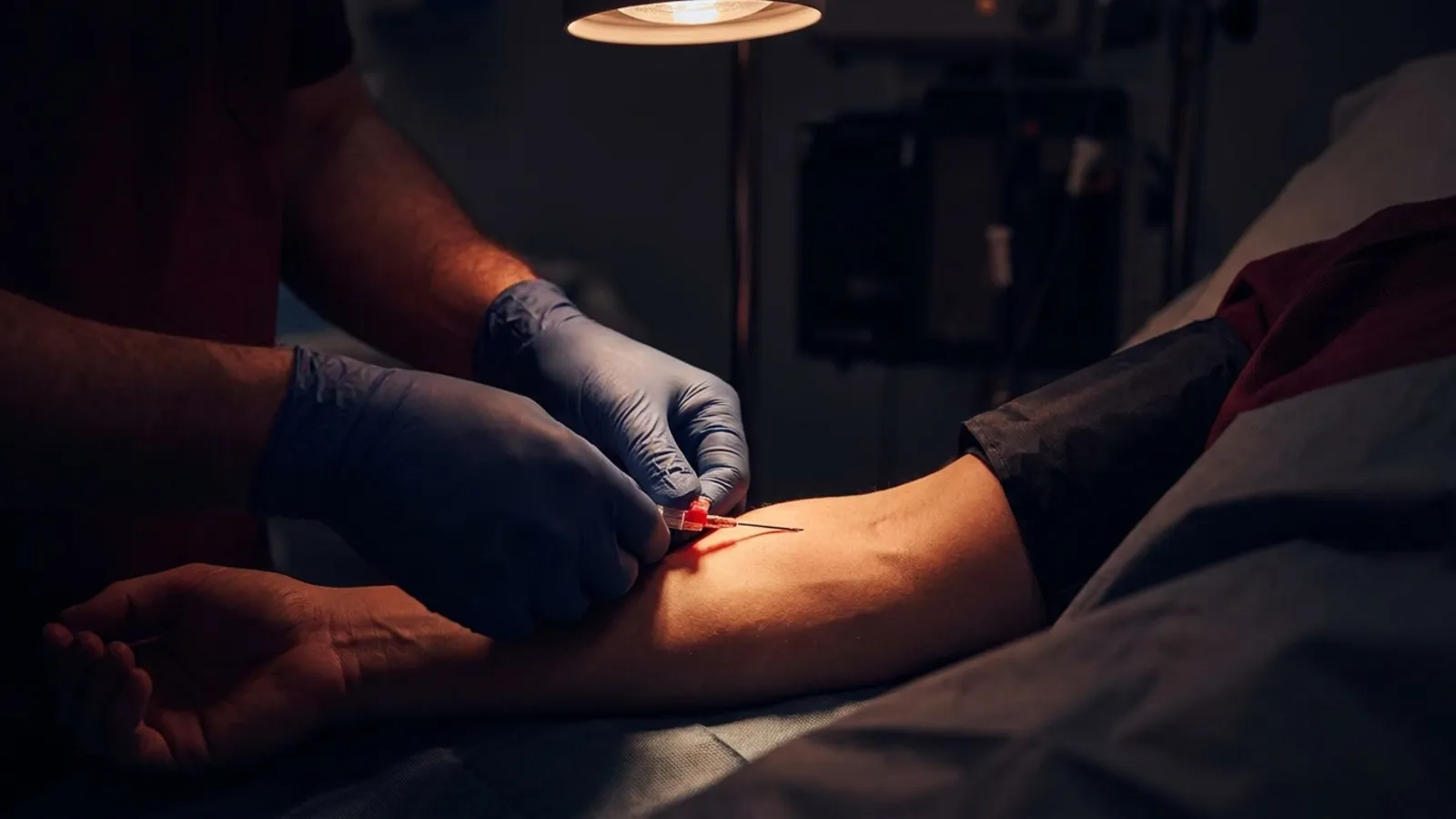
Phlebotomy training teaches venipuncture for blood collection: inserting a needle, drawing samples, and removing the needle immediately. IV cannulation training teaches peripheral IV insertion: placing a flexible catheter that stays in the vein for hours or days to deliver fluids, medications, or blood products. Both procedures access veins, but they require different equipment, technique refinements, ongoing responsibilities, and competency documentation. Confusing the two is common, and it leads nurses and allied health professionals to enroll in the wrong program or assume one skill automatically qualifies them for the other.
If you are a nurse, medical assistant, phlebotomist, or paramedic trying to figure out which training you actually need, you are not alone. Job postings mix the terms. Some programs bundle phlebotomy and cannulation into one certificate. Others treat them as entirely separate competencies. This guide breaks down phlebotomy vs IV cannulation training honestly so you can match the program to the work you will perform, not just the credential on the wall.
What is phlebotomy training?
Phlebotomy training prepares healthcare workers to perform venipuncture, the controlled puncture of a vein to collect blood for laboratory testing. The procedure is brief. You insert a needle, attach collection tubes, draw the required volume, withdraw the needle, and apply pressure.
Typical phlebotomy curriculum includes:
- Vein anatomy and site selection for blood draw
- Order of draw and tube additive compatibility
- Patient identification and specimen labeling
- Infection control and needle safety
- Techniques for difficult draws (pediatric, geriatric, fragile veins)
- Patient communication for needle-anxious clients
Phlebotomy certification programs range from short vocational courses to employer-sponsored onboarding. Many phlebotomists work in outpatient labs, hospital draw stations, or mobile blood collection. The scope is diagnostic: get the sample, label it correctly, and move on. No catheter remains in the vein, and no ongoing infusion management follows.
According to a 2024 study in the Journal of Infusion Nursing evaluating nursing students' venipuncture and peripheral IV cannulation skills, students scored a mean of 7.2 out of 15.0 on knowledge assessments covering both procedures. That gap between "knowing the steps" and performing them reliably under observation is exactly why supervised practice matters for both skills, not just cannulation.
What is IV cannulation training?
IV cannulation training prepares healthcare professionals to insert a peripheral IV catheter (PIVC) and maintain venous access for ongoing therapy. The needle guides the catheter into the vein. You confirm flash, advance the catheter, withdraw the introducer needle, secure the line, and connect infusion equipment.
Typical IV cannulation curriculum includes:
- Vascular anatomy applied to catheter site selection
- Catheter gauge selection based on therapy and vein caliber
- Insertion angle, skin traction, flash recognition, and catheter advancement
- Securing, dressing, and line maintenance
- Complication recognition (infiltration, extravasation, phlebitis)
- Documentation and when to escalate to vascular access specialists
Cannulation does not end at insertion. You monitor the site, assess patency before each infusion, manage occlusions, and know when to remove or replace the line. For a deeper look at what competent cannulation training covers from first stick through mastery, see our guide to IV cannulation training before your first stick.
The NCBI Nursing Advanced Skills textbook notes that venipuncture and IV cannulation share early procedural steps, but cannulation adds catheter threading, securing, and the full scope of IV therapy management that blood collection never requires.
Phlebotomy vs IV cannulation: side-by-side comparison
| Factor | Phlebotomy (venipuncture) | IV cannulation |
|---|---|---|
| Primary purpose | Collect blood samples for testing | Establish ongoing IV access for therapy |
| Device left in vein | No. Needle removed after draw | Yes. Flexible catheter remains in place |
| Duration | Minutes | Hours to days |
| Gauge selection | Smaller needles typical (21g-23g) | Varies by therapy (18g-24g) |
| Ongoing monitoring | None after specimen collection | Required throughout catheter dwell time |
| Complication focus | Hematoma, missed stick, sample quality | Infiltration, extravasation, phlebitis, infection |
| Common performers | Phlebotomists, lab techs, nurses, MAs | Nurses, paramedics, some advanced clinicians |
| Training emphasis | Order of draw, labeling, patient flow | Insertion technique, line care, infusion compatibility |
Bottom line: Phlebotomy is a single-event venous access skill optimized for specimen collection. IV cannulation is a sustained-access skill that includes insertion, maintenance, and complication management. Shared anatomy does not mean shared competency.
Does phlebotomy experience transfer to IV cannulation?
Partially, but not enough to skip cannulation training.
Phlebotomists and nurses who draw blood regularly develop strong vein palpation, tourniquet technique, and patient communication skills. Those foundations help. According to Western Australia Health's peripheral IV cannula guideline, healthcare workers involved in PIVC insertion must be trained and assessed as competent in evidence-informed practices specific to catheter insertion and management. Phlebotomy competency alone does not satisfy that requirement.
What transfers well:
- Vein assessment and site selection instincts
- Hand steadiness and needle orientation
- Managing anxious or needle-phobic patients
- Infection control habits
What does not transfer without dedicated training:
- Catheter advancement after flash (different timing and angle than a blood draw)
- Securing the line and preventing dislodgement
- Assessing patency, flow rate, and infiltration during infusion
- Selecting catheter gauge based on ordered therapy
- The psychology of maintaining access under clinical pressure
The 2024 Journal of Infusion Nursing study found nursing students scored a mean performance of 16.2 out of 28.0 on simulated peripheral IV cannulation, despite overlapping venipuncture training in their programs. Separate assessment, separate curriculum, separate competency validation. Treating phlebotomy as a substitute for cannulation training is how competent blood drawers end up missing IVs on the floor.
If you already draw blood confidently and want to add IV skills, you need cannulation-specific supervised practice, not a refresher on venipuncture. Our vein anatomy for IV cannulation guide explains the palpation and site-selection differences that matter once you are placing a catheter instead of a needle.
Training requirements: how programs differ
Phlebotomy and IV cannulation training differ in length, assessment standards, and what employers expect to see on your record.
| Training element | Phlebotomy programs | IV cannulation programs |
|---|---|---|
| Typical duration | 4-12 weeks (vocational) or employer onboarding | 1-2 day intensives to multi-week certification tracks |
| Hands-on requirement | Supervised blood draws on patients or volunteers | Supervised catheter insertions on simulation and live patients |
| Competency validation | Documented successful draws, often 50-100 | Documented successful cannulations under observation |
| Credential type | Phlebotomy certificate (CPD, vocational, or employer) | Course completion certificate, employer competency, or state authorization |
| Ongoing maintenance | Periodic revalidation varies by employer | Annual skills validation common in hospitals |
The Infusion Nurses Society Standards of Practice require documented training plus supervised performance to establish IV competence. A written test or online module alone does not meet that bar. The same principle applies in reverse: a cannulation course does not qualify you to perform phlebotomy in a lab setting where order-of-draw accuracy and specimen integrity are the primary concerns.
For a broader view of how IV training programs compare across formats and price points, see our IV training for nurses hub and our online vs hands-on IV training comparison.
Who needs phlebotomy training vs IV cannulation training?
Your role and scope of practice determine which training path matters.
Choose phlebotomy training if you:
- Work in a laboratory, outpatient draw station, or blood donation setting
- Need to collect blood samples but will not administer IV fluids or medications
- Are a medical assistant whose employer requires phlebotomy certification for lab duties
- Want to add specimen collection to a role that does not include IV therapy
Choose IV cannulation training if you:
- Are a nurse, paramedic, or EMT who will start IV lines for treatment
- Work in ER, ICU, med-surg, infusion, or mobile IV settings
- Need to maintain catheters and monitor infusion sites
- Are building toward advanced vascular access or specialty roles
You may need both if:
- Your role spans lab draws and IV therapy (common in small hospitals and rural settings)
- You are an LPN or LVN in a state where IV authorization and phlebotomy competency are documented separately
- You are expanding scope from phlebotomy into nursing or paramedicine
Many nurses perform both procedures daily. Each requires its own documented competency. For what hospitals actually verify during credentialing, see our guide to IV competency for nurses. For the certification landscape on the IV side, start with what IV certification is and is not.
How to build cannulation skill if you already know phlebotomy
If phlebotomy gave you vein confidence but cannulation still makes your heart rate spike, the gap is usually technique and psychology, not anatomy.
1. Acknowledge the procedural differences. Blood draw flash means "sample ready." Cannulation flash means "advance the catheter now." Mixing the two timelines is the most common error phlebotomists carry into IV work.
2. Get supervised catheter repetitions. Research on clinical skill acquisition suggests 25 to 50 successful insertions before cannulation becomes reliably automatic. Phlebotomy reps do not count toward that threshold because the motor pattern differs. Read our breakdown of how many IV sticks it takes to become proficient for the full picture.
3. Train the mental game separately. Cannulation happens in higher-stakes settings: crashing patients, fluid resuscitation, medication administration. The central nervous system response that degrades fine motor control under pressure is a cannulation-specific challenge. Our psychology of IV insertion article covers CNS management techniques that phlebotomy training never addresses.
4. Choose hands-on over theory-only programs. Online modules can review anatomy, but they cannot teach the tactile feedback of catheter advancement on a rolling vein. For cannulation, prioritize programs with live sticks and instructor feedback.
At VeinCraft Academy, we built our curriculum for healthcare professionals who need real cannulation competence, not a rubber-arm certificate. Level 1: The Method is an 8-hour intensive at $199 covering psychology, anatomy, technique, simulation drills, and live cannulation on real patients with individual coaching at a 10:1 ratio. Level 2: The Craft at $299 extends into hard sticks, special populations, and ultrasound-guided peripheral access. All instruction is delivered by credentialed clinicians with active field experience under a mastery-based progression model. You advance when you demonstrate competence, not when the clock runs out.
Whether you are crossing over from phlebotomy or building IV skills from scratch, the path is the same: dedicated cannulation training with supervised repetition. Explore enrollment or compare Level 1 and Level 2 to find your starting point.
Can a phlebotomy certification qualify you to start IVs?
No. A phlebotomy certificate documents venipuncture competency for blood collection. It does not authorize or validate peripheral IV catheter insertion and management. Employers who require IV competence look for cannulation-specific training, supervised insertion logs, or employer skills validation. Some states require separate IV authorization for LPNs and LVNs regardless of other venous access credentials.
Do nurses need separate training for phlebotomy and IV cannulation?
Most nursing programs introduce both skills, but clinical exposure varies widely. Many new graduate nurses report feeling unprepared for real-world IV starts despite basic lab training. If your employer requires documented phlebotomy competency for lab duties, that validation is separate from IV cannulation competency. Treat each skill as its own competency cycle: training, supervised practice, validation, and periodic re-check.
Is IV cannulation harder than phlebotomy?
Cannulation involves more steps after venipuncture and carries higher ongoing responsibility. The insertion itself can feel harder because catheter advancement, securing, and line management add complexity beyond a blood draw. That said, many clinicians find cannulation easier to perform consistently once trained because the catheter stays in place and you are not racing to fill tubes before the vein collapses. Difficulty depends on your patient population, practice setting, and how much supervised repetition you received for each skill.
How long does IV cannulation training take compared to phlebotomy?
Phlebotomy vocational programs often run 4-12 weeks with dozens of supervised draws. IV cannulation intensives can build a strong foundation in one to two days of focused hands-on instruction, though reaching full competence requires ongoing practice after the course. The time investment differs because phlebotomy programs spread training across many patient encounters over weeks, while cannulation intensives compress anatomy, psychology, technique, and live sticks into a single focused session. Both skills require maintenance through deliberate practice.
Should I take a combined phlebotomy and cannulation course?
Combined courses work if the program provides adequate supervised practice for both skills separately. Verify that cannulation training includes actual catheter insertions on live patients or high-fidelity simulation, not just a phlebotomy draw with a catheter mentioned in the lecture. Ask how many supervised cannulations you will perform, who validates competency, and whether the certificate distinguishes venipuncture from cannulation on your transcript. If the answer is vague, consider dedicated cannulation training from a program that specializes in IV access.
Phlebotomy and IV cannulation both start with a vein and a needle, but the training, scope, and clinical responsibility diverge the moment you decide whether the access is temporary or sustained. Match your program to the procedure you will actually perform, build competence through supervised repetition, and treat each skill as its own credential path. Ready to move from blood draws to confident cannulation? Enroll at VeinCraft Academy and become the provider your unit trusts with the hard stick.
VeinCraft Academy is a mastery-focused IV cannulation training program for healthcare professionals. All instruction is delivered by credentialed clinicians with active field experience. VeinCraft Academy is a RevivaGo Company.