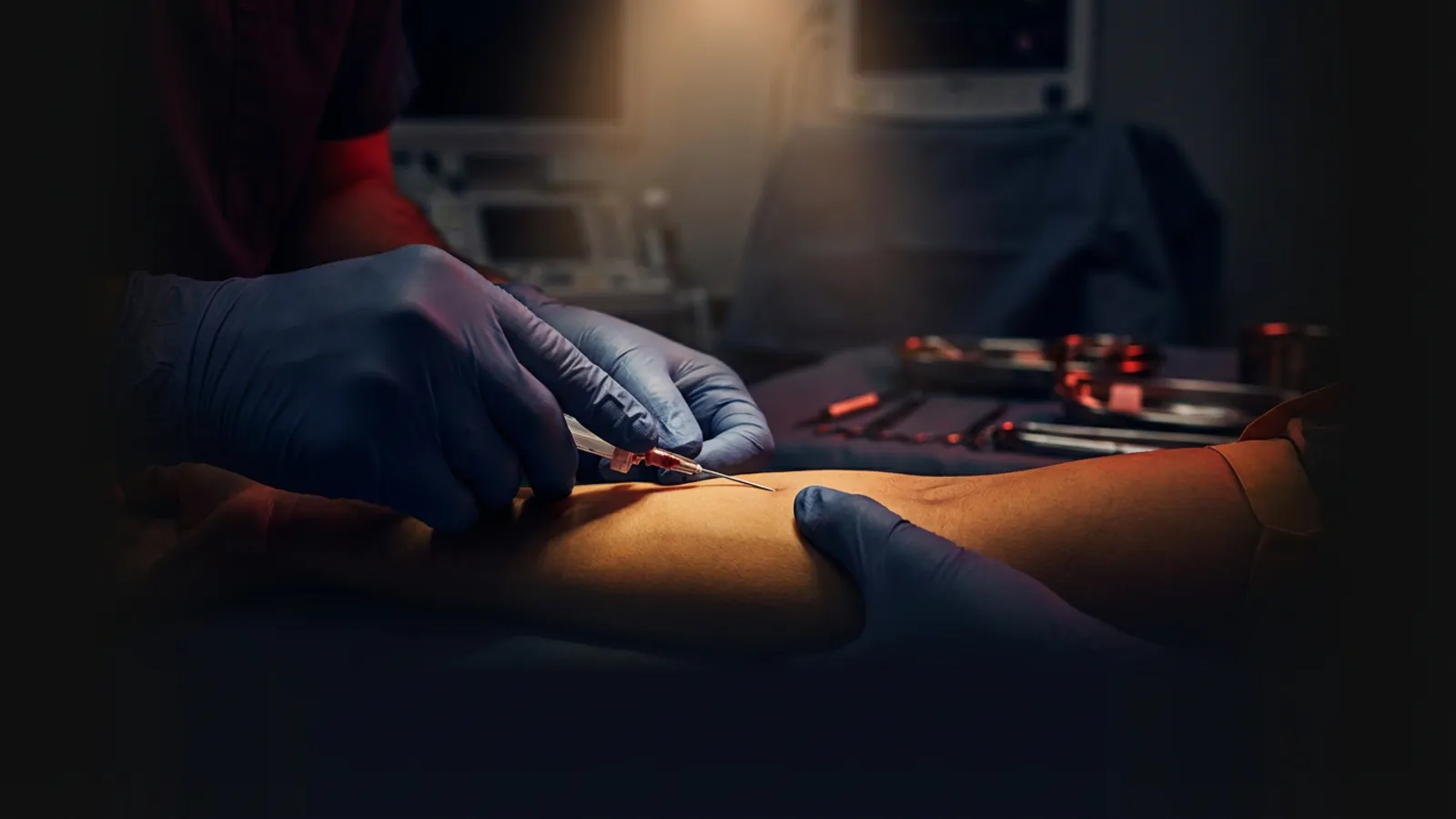
Online IV training teaches theory, anatomy, and procedural knowledge through video lectures, quizzes, and self-paced modules. Hands-on IV training adds supervised practice on simulation models and live patients, building the muscle memory and tactile sensitivity that cannulation requires. Both formats have a place in professional development, but they build different skills, and understanding what each can and cannot do matters before you spend money on either.
If you are a nurse, paramedic, or healthcare professional weighing your IV training options, you have probably noticed that programs range from $50 online courses to $500 multi-day intensives. The price gap is real, but so is the skill gap between watching someone start an IV and actually doing it yourself under clinical conditions. This comparison breaks down both approaches honestly so you can choose the one that matches what you actually need.
What online IV training covers
Online IV courses are not worthless. They cover foundational knowledge that every provider needs, and they do it in a format that works around shift schedules and family obligations.
Typical online curriculum includes:
- Vein anatomy and physiology (superficial vs deep veins, valve structure, vein selection)
- Catheter types, sizes, and indications
- Step-by-step insertion technique demonstrated via video
- Complication recognition (infiltration, phlebitis, extravasation)
- Infection control and site care
- Documentation and best practices
The better online courses use high-quality video with multiple camera angles, slow-motion replays of flash recognition and catheter advancement, and interactive quizzes that reinforce learning. Some include downloadable reference cards you can take to the bedside.
Where online training works well: It is excellent for reviewing theory you have already learned, preparing for a hands-on course, studying for written certification exams, or refreshing knowledge after time away from clinical practice. If your goal is understanding how IV cannulation works, online training delivers.
What hands-on IV training adds
Hands-on training includes everything online training covers, plus supervised practice that builds the physical skills online content cannot replicate.
What hands-on adds beyond theory:
- Palpation practice on real anatomy (feeling veins, assessing depth, diameter, and resilience)
- Tourniquet application technique and timing
- Live insertion practice on simulation models and real patients
- Tactile feedback: the "pop" of venipuncture, flash recognition in real time, catheter advancement feel
- Immediate instructor feedback on angle, traction, speed, and body positioning
- Recovery from a missed attempt while the patient is still in front of you
- Psychology of the stick: managing your own central nervous system under the pressure of a real clinical interaction
The difference between watching an IV start on video and doing one yourself is the same difference between watching someone drive a car and getting behind the wheel. The theory transfers. The motor skill does not.
Head-to-head comparison
| Factor | Online Training | Hands-On Training |
|---|---|---|
| Theory and anatomy | Covered thoroughly | Covered, plus applied in practice |
| Procedural knowledge | Video demonstrations | Live demonstration + supervised practice |
| Muscle memory | Not developed | Built through repetition on real anatomy |
| Tactile sensitivity | Cannot be taught on screen | Developed through palpation and insertion |
| Instructor feedback | Quizzes and written feedback only | Real-time correction of technique |
| Psychology/anxiety management | Discussed conceptually | Practiced under real clinical pressure |
| Scheduling flexibility | Self-paced, any time | Fixed schedule, specific dates |
| Cost | $50-$150 typically | $199-$500 depending on program |
| CEU/certification | Often included | Varies by program |
| Confidence after completion | Theory confidence | Clinical confidence with technique |
Bottom line: Online training builds knowledge. Hands-on training builds competence. They are not interchangeable for a procedural skill like IV cannulation.
What the research says
The evidence on this question is clear, even if the marketing from online course providers avoids mentioning it.
A 2023 systematic review and meta-analysis published in BMC Medical Education found that simulation-based nursing education produces strong learning effects in the psychomotor domain, meaning hands-on practice directly improves physical skill performance in ways that didactic instruction alone does not.
According to research published in the Journal of Clinical Nursing, peripheral IV catheter failure occurs in approximately 36% of all insertions. The primary predictors of success are provider experience and technique consistency, both of which are developed through supervised repetition, not video consumption.
A study in the Journal of PeriAnesthesia Nursing found that 80.4% of nursing students report significant anxiety during IV interventions. That anxiety is a physiological response, a central nervous system activation that degrades fine motor control. You cannot reduce it by reading about it. You reduce it by performing the skill repeatedly in a supervised environment where an instructor helps you manage the stress response in real time.
The research consistently points to the same conclusion: theory instruction builds understanding, but motor skill development requires physical practice with feedback. There is no shortcut through a screen.
The muscle memory problem
IV cannulation is a psychomotor skill. It requires your hands to know things your brain cannot teach them.
Identifying flash in the catheter chamber happens in a fraction of a second. The decision to stop advancing, confirm position, and begin threading the catheter is partly cognitive and partly reflexive. That reflex builds through repetition. Simulation studies show that providers who perform 50 or more supervised IV insertions develop significantly more consistent technique than those with fewer than 20 attempts.
Online training can show you what flash looks like. It can explain the correct insertion angle. It can walk you through catheter advancement step by step. What it cannot do is train your fingers to feel the subtle resistance change when you enter a vein, or teach your hands the difference between a through-and-through puncture and a clean entry. That requires live tissue, real anatomy, and a catheter in your hand.
This is not a criticism of online training. It is a limitation of the format. A cooking class on YouTube teaches you what a saute looks like. It does not teach your hands the wrist action and heat sensing that make it work. Procedural skills need practice.
When online training makes sense
Online training is the right choice in specific situations. Being honest about this matters, because recommending hands-on training for every scenario would be inaccurate.
Online is a good fit when:
- You need theory knowledge for a written exam or certification test
- You want to review anatomy, pharmacology, or complication management
- You are preparing for a hands-on course and want to arrive with stronger foundational knowledge
- You have not done IV starts in a while and want a knowledge refresher before returning to practice
- Your employer requires CEU credits and the course content meets that need
- Budget or geography make in-person attendance impossible right now
If you fall into any of these categories, a quality online course is a reasonable investment. Look for courses with high production quality, clinical instructors with active practice experience, and content that covers complication management, not just insertion technique.
When you need hands-on training
Hands-on training is the better choice when your goal is building or rebuilding the physical skill of IV cannulation.
Hands-on is necessary when:
- You are a new graduate who had limited IV practice in nursing school
- You can start some IVs but difficult veins still cause anxiety
- You are expanding your scope to include IV skills (EMTs, paramedics, mobile IV providers)
- Failed sticks are affecting your confidence or your business
- You have watched videos and studied technique but still freeze when the catheter is in your hand
- You want to move into roles that require advanced IV competence (ICU, ER, flight nursing, PICC teams)
The reason many IV training programs fail to build confidence is not that they lack theoretical content. It is that they do not provide enough supervised live-patient practice for providers to develop the motor skills and psychological resilience that real cannulation demands.
Programs like VeinCraft Academy's Level 1: The Method pair foundational IV training with live-patient practice, psychology-first instruction, and mastery-based progression where you advance when you demonstrate competence, not when the clock runs out. At $199, the cost is comparable to many online courses while delivering something an online course structurally cannot: real sticks under real supervision.
Can you learn IV insertion online?
You can learn the theory and procedural knowledge of IV insertion online. You cannot develop the psychomotor skills, tactile sensitivity, or muscle memory required for reliable cannulation through a screen. Online courses teach you how IV insertion works. Hands-on training teaches your hands how to do it. For providers who need clinical competence rather than theoretical knowledge, online training alone is insufficient.
Is online IV certification valid?
Online IV certification is valid for meeting employer CEU requirements and documenting continuing education hours. However, a certification earned entirely online does not demonstrate hands-on competence because the format cannot assess physical skill performance. Some employers and state boards distinguish between online-only certifications and programs that include a supervised skills check. Check your employer's requirements before enrolling.
How many practice sticks do you need to build confidence?
Research on procedural skill acquisition suggests that providers who perform 50 or more supervised IV insertions develop significantly more consistent technique than those with fewer attempts. However, quality of practice matters more than raw numbers. Supervised attempts with real-time feedback from experienced instructors build skill faster than unsupervised repetition. VeinCraft Academy's Level 2: The Craft includes extended clinical rotation specifically because volume under observation is how mastery develops.
What is the best IV training format for working nurses?
The best format depends on your current skill level and goals. If you need a knowledge refresher or CEU credits, a quality online course works well. If you need to build or rebuild hands-on cannulation confidence, a focused intensive with live-patient practice and instructor feedback is more effective. The ideal path for most working nurses is foundational theory (which you likely already have from nursing school or online review) followed by a dedicated hands-on intensive that compresses skill development into one to two focused days.
The choice between online and hands-on IV training is not about which is better in the abstract. It is about matching the format to what you need right now. If you need knowledge, go online. If you need confidence with a catheter in your hand, you need live practice with feedback. Explore VeinCraft Academy's courses to see how psychology-first, mastery-based training starting at $199 builds the competence that lasts beyond the classroom.
VeinCraft Academy is a mastery-focused IV cannulation training program for healthcare professionals. All instruction is delivered by credentialed clinicians with active field experience. VeinCraft Academy is a RevivaGo Company.