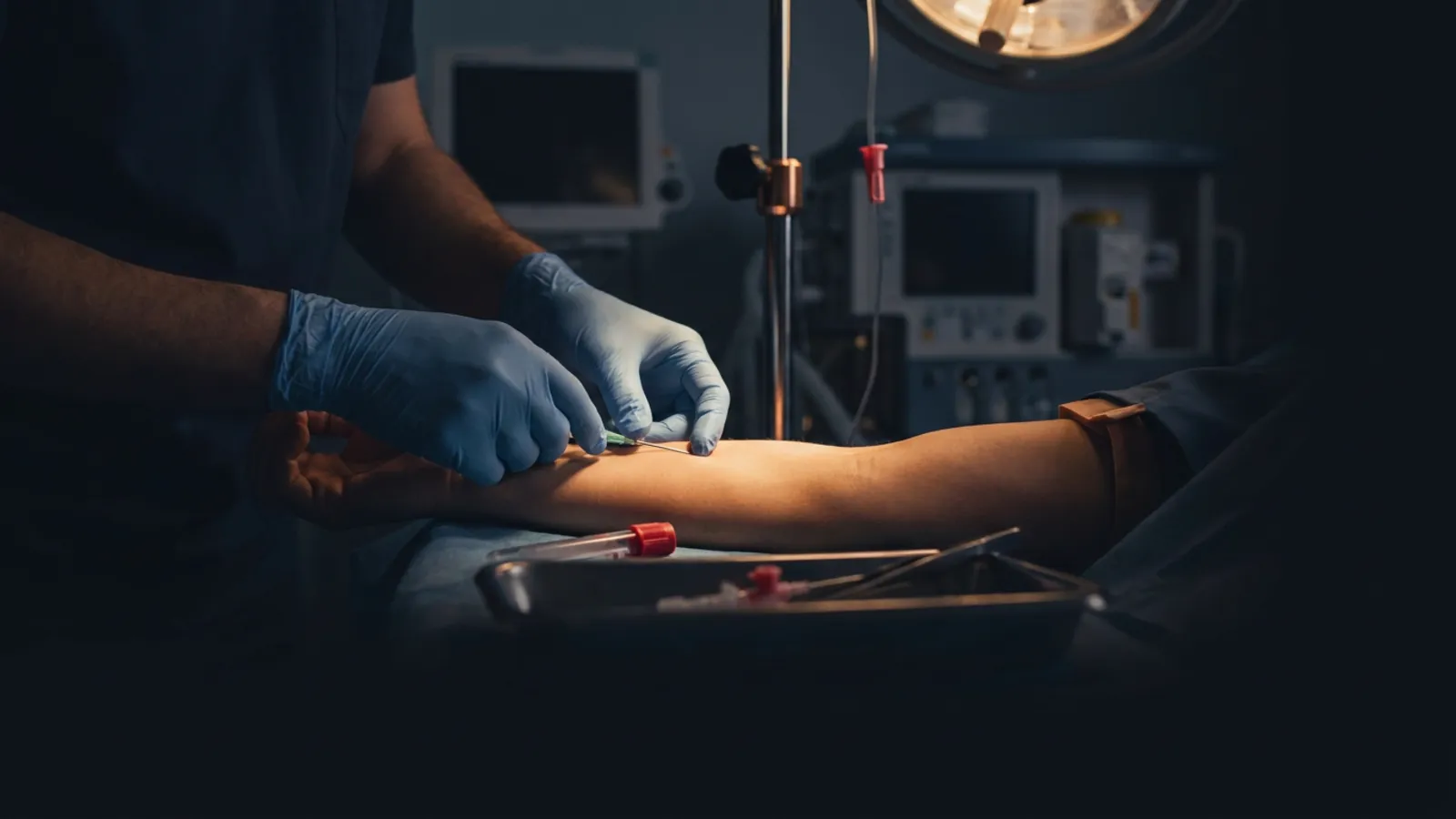
To become an IV therapy nurse, complete an ADN or BSN nursing program, pass the NCLEX-RN to earn your RN license, gain 1 to 2 years of bedside experience that includes consistent IV cannulation practice, transition into an infusion-focused role, and pursue the Certified Registered Nurse Infusion (CRNI) credential after accumulating 1,600 documented hours of infusion therapy experience. Most nurses reach the CRNI milestone within 4 to 7 years of starting nursing school.
The career path itself is straightforward. The part most nurses underestimate is the skill foundation. IV therapy nursing is one of the few specialties where the team's trust in you on day one comes down to what your hands can do with a catheter. The credential opens doors. The competence keeps them open.
This guide breaks down how to become an IV therapy nurse step by step, the work settings where infusion specialists practice, what the role pays, the CRNI credentialing path, and how to build the cannulation skill foundation that separates the IV therapy nurses everyone wants on their unit from the ones who just hold the title.
What an IV therapy nurse actually does
An IV therapy nurse is a registered nurse who specializes in administering medications, fluids, and other treatments through intravenous, central, or implanted vascular access devices. The role goes well beyond starting peripheral IVs. Infusion specialists manage chemotherapy administration, antibiotic regimens, parenteral nutrition, hydration therapy, blood and blood product transfusions, biologic infusions for autoimmune and chronic conditions, and the vascular access devices that make those treatments possible.
Day-to-day, an IV therapy nurse will:
- Place and manage peripheral IVs, midlines, PICCs, ports, and central lines within scope
- Administer chemotherapy, antibiotics, biologics, electrolytes, blood products, and IV fluids on physician orders
- Monitor patients for infusion reactions, infiltration, extravasation, and access-device complications
- Educate patients and families on therapy, side effects, and home care for indwelling devices
- Collaborate with pharmacy, oncology, primary care, and home health teams on infusion plans
- Document infusion events, complications, and patient response per facility and regulatory standards
The specialty exists at the intersection of clinical precision and patient relationship. Infusion patients often see the same nurse over weeks or months of treatment. The skill on the access device matters because the relationship depends on it. A nurse who blows a vein on a chemo patient with limited venous real estate has done more than miss a stick.
How to become an IV therapy nurse in 5 steps
The path from nursing student to credentialed infusion specialist follows a predictable sequence.
1. Complete an accredited nursing program. Earn either an Associate Degree in Nursing (ADN, typically 2 years) or a Bachelor of Science in Nursing (BSN, typically 4 years). Most hospital and large infusion employers prefer BSN-prepared nurses, and many require it for inpatient infusion and oncology roles. Smaller ambulatory infusion centers, home infusion agencies, and mobile IV companies frequently accept ADN-prepared RNs.
2. Pass the NCLEX-RN and earn your RN license. After graduation, sit for the NCLEX-RN examination through your state board of nursing. A passing score, combined with state board verification, results in your active RN license. Your license must remain unrestricted in good standing for all subsequent infusion specialty work.
3. Build 1 to 2 years of bedside experience with IV-rich practice. Most infusion employers require at least 1 year of acute-care RN experience before considering candidates for infusion specialty roles. The strongest preparation comes from units with high IV volume, including medical-surgical floors, emergency departments, intensive care units, oncology units, and post-anesthesia care units. The goal during this phase is not just exposure but building cannulation competence and confidence under pressure.
4. Transition into an infusion-focused role. Apply to dedicated infusion settings: hospital vascular access teams, ambulatory infusion centers, oncology infusion units, home infusion agencies, dialysis centers, or mobile IV therapy companies. Some employers also offer infusion residencies or internal vascular-access team training programs for nurses moving from general clinical practice into specialty infusion work.
5. Pursue CRNI certification once eligible. After accumulating a minimum of 1,600 documented hours of infusion therapy experience within the past 2 years, register for the Certified Registered Nurse Infusion (CRNI) examination offered by the Infusion Nurses Society. The credential signals specialty-level competence to employers, often unlocks higher pay tiers, and is the standard certification for infusion practice.
Total timeline from nursing school start to CRNI certification typically runs 4 to 7 years, depending on your degree path and how quickly you accumulate infusion-specific hours after licensure. Nurses asking how to become an IV therapy nurse on a faster timeline often pursue accelerated BSN programs and target hospital med-surg or oncology roles where IV-rich practice is built into the daily workflow.
For nurses who already hold an LPN license and want to add IV work without bridging to RN, our LPN IV certification guide covers the LPN-specific scope, state rules, and career path.
Where IV therapy nurses work
The setting you choose shapes the daily reality of the role, the patient population, the pace, and the pay. IV therapy nurses practice across six primary settings.
| Setting | What the work looks like | Patient population | Pace |
|---|---|---|---|
| Hospital vascular access team | PICCs, midlines, ultrasound-guided PIVs, difficult access consults from other units | Inpatient, mixed acuity | Variable, on-call common |
| Ambulatory infusion center | Scheduled outpatient infusions: biologics, immunoglobulin, hydration, antibiotics | Chronic and autoimmune outpatients | Steady, predictable schedule |
| Oncology infusion unit | Chemotherapy administration, port access, anti-emetic and supportive infusions | Oncology outpatients and inpatients | Moderate, emotionally demanding |
| Home infusion | In-home antibiotic, parenteral nutrition, biologic, and hydration therapy | Chronic disease, post-surgical recovery, hospice | Independent, drive between visits |
| Dialysis | Vascular access management, AV fistula and graft care, central venous catheter management | End-stage renal disease | Structured shifts, repeat patients |
| Mobile IV therapy | In-home or on-site hydration, vitamin, and wellness IV therapy | Consumer wellness, hangover, recovery, athletic | Variable, often part-time or 1099 |
Bottom line: Hospital and oncology infusion roles offer the highest specialty depth and the most direct path to CRNI hours. Ambulatory and home infusion give you predictable schedules and patient continuity. Mobile IV therapy gives you the most flexibility and the option to operate as a small-business owner, with the trade-off that the business succeeds or fails on your first-stick rate.
IV therapy nurse salary
IV therapy nurse compensation varies significantly by setting, experience, geography, and certification status.
According to Research.com's 2026 review of infusion nursing careers, the average annual salary for infusion and IV nurses in the United States is $85,803, with top earners reaching $141,000 in high-paying states and specialty roles. PayScale data from September 2025 places the median annual salary at $71,565, with entry-level infusion nurses earning around $30.82 per hour and infusion nurses with 20 or more years of experience averaging $40.53 per hour.
Three factors drive the spread between entry-level and top-tier compensation:
- Setting: Hospital vascular access teams and oncology infusion roles typically pay above average. Ambulatory and home infusion fall in the middle. Mobile IV therapy varies widely depending on whether the nurse is W-2 employed or operating as an independent provider.
- Certification: CRNI-certified infusion nurses generally command higher pay than non-certified peers, particularly in hospital and specialty infusion settings where the credential is recognized in pay tier structures.
- Geography: California, Massachusetts, New York, and Washington consistently report the highest infusion nurse salaries. Cost of living adjustments narrow the real-dollar difference, but headline pay reflects local market demand and unionized rates in some metros.
Travel infusion nursing is a separate compensation tier. Travel assignments at large medical centers regularly pay $2,000 to $2,800 per week, often with housing stipends and completion bonuses on top.
CRNI certification: the credential that defines the specialty
The Certified Registered Nurse Infusion (CRNI) credential is the recognized specialty certification for infusion nursing in the United States. Administered by the Infusion Nurses Certification Corporation (INCC) on behalf of the Infusion Nurses Society (INS), the CRNI examination validates specialty-level competence across the practice domains that define the role.
Eligibility requirements:
- Active, unrestricted RN license in the United States
- Minimum of 1,600 hours of infusion therapy experience as an RN within the past 2 years
- Experience may include clinical practice, infusion education, research, or administration within the specialty
Exam structure:
The CRNI examination consists of 140 multiple-choice questions, of which 120 are scored and 20 are unscored pretest items. Test-takers have 3 hours to complete the exam. The exam is offered twice annually, in March and September, through a testing window administered by INCC.
Content domains covered:
- Principles of Practice (infectious disease, quality improvement, ethics, regulation)
- Access Devices (peripheral, midline, central venous, implanted ports, ultrasound-guided insertion)
- Infusion Therapies (medications, fluids, blood products, parenteral nutrition, antineoplastic agents)
Recertification:
CRNI certification renews every 3 years through documented continuing education in infusion nursing or by retaking the examination. The recertification standard ensures certified nurses remain current with evolving practice standards published in the INS Infusion Therapy Standards of Practice.
For nurses planning a CRNI track, the bedside experience phase matters more than the exam preparation. The 1,600 hours rule is a floor. The infusion nurses who pass the exam and excel afterward are the ones who built deliberate practice on access devices, infusion safety, and patient assessment during those hours, not the ones who logged time and prepared for the test in the final month.
What separates the IV therapy nurses everyone wants to hire
The credential is the entry point. The skill is what determines whether your first 6 months in an infusion role go well or badly. Three competencies separate the IV therapy nurses who become specialty-team anchors from the ones who burn out within a year.
First-attempt cannulation success rate. Infusion patients have the most challenging vascular access in clinical practice. Chemo patients have scarred and exhausted veins. Long-term IV antibiotic patients have multiple prior access sites. Geriatric infusion patients have fragile, rolling veins. The infusion nurse who consistently lands the first attempt becomes the one chemo, oncology, and home infusion teams request by name. The one who misses repeatedly becomes the one patients refuse on return visits.
Calm under clinical pressure. Infusion errors carry serious consequences. Vesicant extravasation, infusion reactions, central line complications, and chemotherapy administration mistakes can cause significant patient harm. The infusion nurse who can recognize a problem early and act systematically while remaining outwardly calm is the nurse the team builds around. The one who panics escalates problems and erodes patient trust. The psychology of the stick is the foundation of every other infusion safety behavior.
Patient communication during the procedure. Infusion nursing involves long visits, repeat appointments, and emotionally heavy clinical contexts. Patients judge the nurse by what happens during the cannulation. The nurse who explains the procedure, manages anxiety, names what they are doing as they do it, and stays present after a miss builds the kind of patient relationship that defines specialty infusion practice.
For the deeper logic of why these three competencies separate strong infusion nurses from struggling ones, read our piece on how IV competence accelerates nursing career advancement.
How VeinCraft Academy prepares you for IV therapy specialty work
VeinCraft Academy's curriculum is designed for healthcare professionals who want to perform IV cannulation with the kind of competence that holds up in specialty settings. We start with psychology, not technique. Before catheter gauge or insertion angle, we address how your nervous system behaves under performance pressure and how to build the calm, repeatable focus that infusion practice demands.
From there, progression is mastery-based. You advance when credentialed clinical instructors with active field experience observe you demonstrating competence on real patients, not when the clock runs out on the course schedule.
Level 1: The Method is an 8-hour intensive at $199 that covers psychology, anatomy, technique, simulation drills, and live cannulation on real patients with individual coaching at a 10:1 student-to-instructor ratio. This is the right starting point for nurses building the cannulation foundation needed before pursuing infusion specialty work.
Level 2: The Craft at $299 extends into hard sticks, special populations, and ultrasound-guided peripheral IV access. This is the level that maps directly to the daily work of an infusion specialist, where most patients present some form of difficult vascular access.
VeinCraft Academy is not a CRNI-prep program and does not currently hold CE provider accreditation. Our role is to build the cannulation skill foundation that infusion specialty work depends on. For information about the broader credentialing landscape and how IV cert categories work, see our complete guide to IV certification courses for nurses and our state-by-state IV therapy certification requirements guide.
Explore enrollment or compare Level 1: The Method and Level 2: The Craft to find the right starting point for where you are in your nursing journey.
How long does it take to become an IV therapy nurse?
The path from nursing school start to credentialed IV therapy nurse takes 4 to 7 years. The breakdown is typically 2 to 4 years to complete nursing school (ADN vs BSN), a few weeks to pass the NCLEX-RN and receive licensure, 1 to 2 years of bedside acute-care experience, and an additional 1 to 2 years working in an infusion-focused role to accumulate the 1,600 hours required for CRNI eligibility. Nurses who enter infusion specialty work immediately after the experience requirement can often sit for CRNI within 3 to 4 years post-licensure.
Can an LPN become an IV therapy nurse?
LPNs cannot hold the CRNI credential, which is restricted to RNs by INS eligibility rules. However, LPNs can perform IV therapy within state scope of practice in most states, and many work in home infusion, long-term care infusion, and supervised ambulatory infusion settings. LPNs who want the full IV therapy nurse specialty role typically bridge to an RN license through an LPN-to-RN or LPN-to-BSN program. For LPN-specific scope and certification information, see our LPN IV certification guide.
Do I need CRNI certification to work as an IV therapy nurse?
CRNI certification is not required to work in most infusion settings. Many ambulatory infusion centers, home infusion agencies, oncology infusion units, and mobile IV companies hire RNs without CRNI as long as they have RN licensure and sufficient clinical experience. CRNI signals specialty-level competence to employers, often unlocks higher pay tiers, and is increasingly preferred or required for senior infusion roles, vascular access team positions, and infusion educator roles. For most nurses entering the specialty, CRNI is a career milestone pursued after the first 2 to 3 years of infusion practice rather than a prerequisite for entry.
What is the difference between an IV nurse and an infusion nurse?
The terms are largely interchangeable in everyday clinical use. "Infusion nurse" is the formal specialty title recognized by the Infusion Nurses Society and is the term used in the CRNI credential. "IV nurse" is a more colloquial label that emphasizes the cannulation and peripheral IV side of the work. Both refer to RNs who administer IV therapies and manage vascular access devices. Some employers use "IV therapy nurse" or "vascular access nurse" to emphasize specific responsibilities within the broader infusion specialty.
Is IV therapy nursing a good career?
IV therapy nursing combines clinical specialty depth, strong job stability, salary potential above the general RN average, and substantial flexibility in work setting. The specialty demand reflects structural growth in outpatient and home-based infusion therapy, biologic medication use, and chronic disease management. Trade-offs include emotionally demanding patient populations in oncology and chronic disease settings, the physical and cognitive demands of high-volume infusion days, and a skill bar where cannulation competence directly affects patient experience and outcomes. For nurses who enjoy procedural work, patient relationships across multiple visits, and a defined specialty identity, IV therapy nursing is one of the higher-satisfaction RN career paths.
How to become an IV therapy nurse is a question about steps, credentials, and timelines. How to thrive as an IV therapy nurse is a question about skill. The CRNI is what makes the specialty visible. The first-attempt success rate is what makes the career last. Ready to build the skill foundation that the specialty depends on? Enroll at VeinCraft Academy and become the IV therapy nurse the team trusts on day one.
This article is educational and is not legal or career advice. Verify current credentialing requirements with the Infusion Nurses Certification Corporation and your state board of nursing before relying on any summary.
VeinCraft Academy is a mastery-focused IV cannulation training program for healthcare professionals. All instruction is delivered by credentialed clinicians with active field experience. VeinCraft Academy is a RevivaGo Company.