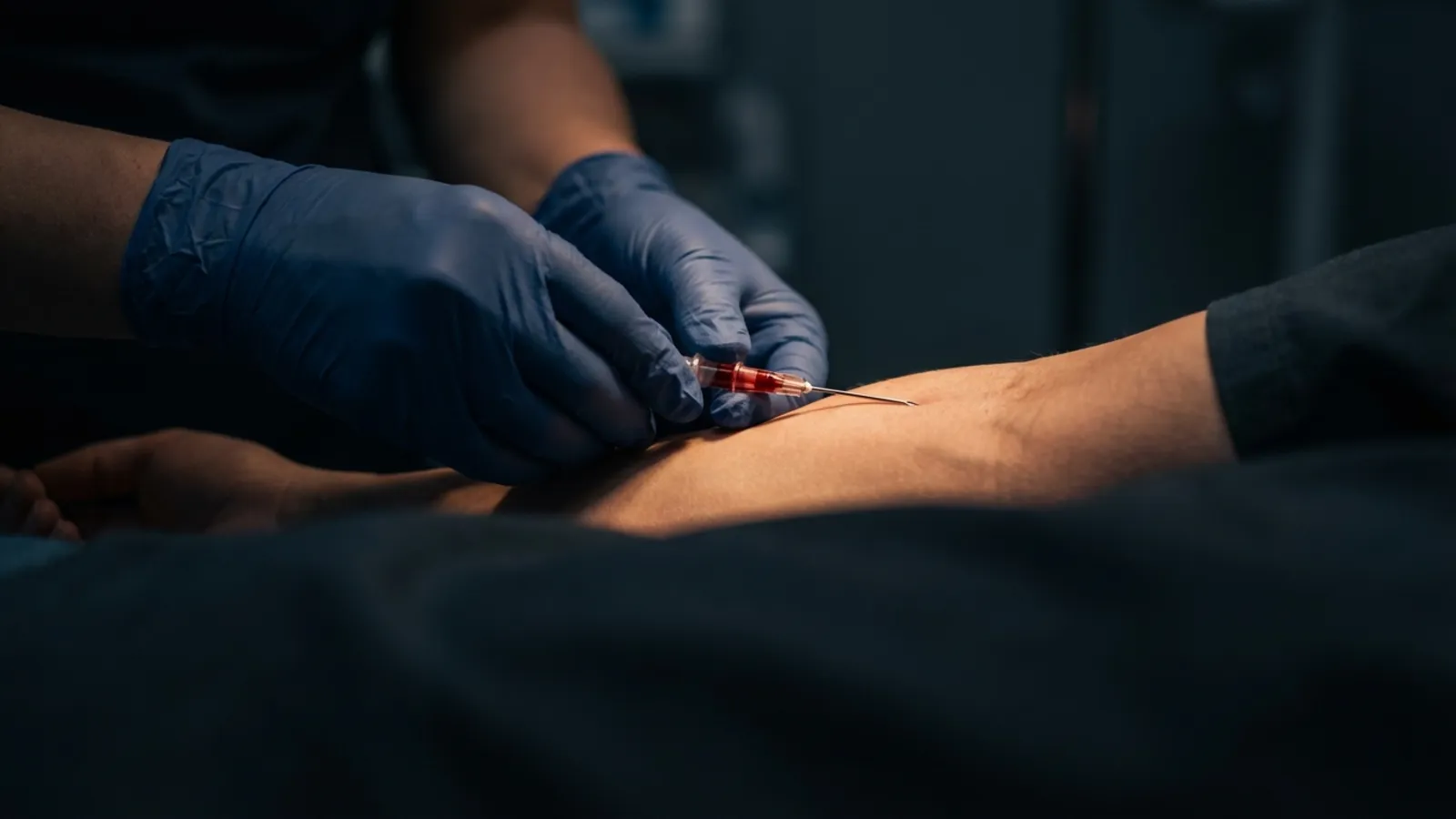
When a charge nurse fills an ICU slot or a flight program reviews applicants, one question separates candidates fast: "Can you get the line?" IV cannulation competence is the gatekeeper skill that opens doors to the highest-demand, highest-pay nursing specialties. Yet most nurses build this skill through inconsistent on-the-job experience rather than structured training.
Vascular access proficiency is not just a clinical skill. It is a career accelerator. The nurse who can reliably cannulate difficult veins, the one colleagues call for the hard stick, earns opportunities that stay closed for everyone else. ICU transfers, ER positions, flight nursing programs, vascular access team roles, and mobile IV businesses all require one thing: a provider who does not hesitate when the vein is hard to find.
Why IV competence is a career-defining skill
IV cannulation is one of the most frequently performed invasive procedures in healthcare. According to a 2019 study in the British Journal of Nursing, nurses perform an estimated 1 billion peripheral IV insertions globally each year. Despite this volume, first-attempt success rates vary widely, from 44% among new graduates to over 90% among experienced specialists, according to research published in the Journal of Infusion Nursing.
That gap is where career trajectories split. Nurses who invest in building IV mastery early become the providers their units depend on. Nurses who avoid difficult access and rely on colleagues to bail them out plateau in roles that never test them.
Hiring managers notice. When a nurse manager fills an ICU or ER position, IV competence is not listed as "preferred" on the job posting. It is assumed. The interview reveals whether you have it.
Career paths that demand IV mastery
IV cannulation proficiency is the entry requirement for the most competitive nursing specialties. Here is how vascular access skill translates to career opportunity across five paths.
ICU and critical care
Critical care nurses manage peripheral lines, central venous catheters, arterial lines, and PICC lines daily. According to AMN Healthcare, IV therapy and hemodynamic monitoring rank among the top five technical skills ICU nurse managers evaluate during hiring. A nurse who struggles with peripheral access will not advance to central line management or arterial monitoring.
ICU positions often pay $75,000 to $110,000 annually, and travel ICU contracts can exceed $2,500 per week. The foundation starts with confident peripheral cannulation.
Emergency department
ER nurses start IVs under time pressure on patients who are dehydrated, in shock, or combative. There is no time to call for help when a trauma patient needs two large-bore lines in the first five minutes. Emergency departments value nurses who can hit veins fast, in suboptimal conditions, with calm hands.
Flight nursing
Flight nurses perform vascular access in moving aircraft on crashing patients, with minimal lighting and equipment. The CFRN (Certified Flight Registered Nurse) exam tests advanced vascular access as a core competency. Most flight programs require a minimum of three years in ICU or ER, and they screen for IV confidence explicitly during the application process.
Flight nurse salaries range from $80,000 to $120,000, with some programs offering sign-on bonuses above $10,000. The career ceiling is high, but the entry bar is higher.
Vascular access and infusion teams
Hospitals increasingly use dedicated vascular access teams (VATs) for difficult peripheral access, PICC insertions, and midline placements. These specialized roles pay $70,000 to $95,000 and often require the Certified Registered Nurse Infusion (CRNI) credential. The path to CRNI starts with demonstrating peripheral IV mastery in clinical practice.
Mobile IV therapy
The mobile IV therapy industry continues to grow, with providers earning $50 to $150 per patient visit. But the business model collapses when your first-attempt success rate drops below 80%. Every failed stick in a client's living room costs you a review, a referral, and repeat business. Nurses who build a mobile IV business need cannulation skills that work without a second chance.
What hiring managers actually look for
It is not the certification alone. Hiring managers evaluate IV competence through three lenses.
Confidence under observation. Can you start a line while a charge nurse watches, or does your technique fall apart under scrutiny? Managers assess whether candidates demonstrate calm, systematic cannulation or show signs of anxiety-driven shortcuts.
Difficult access problem-solving. When the antecubital fossa is not an option, what do you do? Managers want to hear a systematic approach: tourniquet adjustment, alternative site selection, palpation technique, warming, and knowing when to reach for the ultrasound.
Self-awareness about skill gaps. A nurse who says "I can start any IV" raises a red flag. A nurse who says "I am strong on standard access and actively training on difficult veins" demonstrates the growth mindset that ICU and ER teams need.
All VeinCraft Academy courses are taught by credentialed clinicians with active field experience, under a standardized mastery-based curriculum. This is the kind of structured training that produces the skills hiring managers evaluate.
The confidence gap: why training matters more than time
Many nurses assume IV confidence comes naturally with years of bedside experience. Research tells a different story. A study in Nurse Education Today found that structured IV training programs produced higher first-attempt success rates than five years of unstructured clinical experience. Time on the floor exposes you to IVs. Deliberate training builds the psychology of confident cannulation.
The difference is in what happens between your ears before the needle touches skin. Nurses who never address the anxiety response develop avoidance patterns instead. They choose easier veins, defer to colleagues on hard sticks, and slowly narrow their clinical scope rather than expanding it.
VeinCraft Academy's psychology-first curriculum addresses the mental game before technique. Students learn CNS management under pressure, build a pre-stick routine, and practice on live patients with instructor coaching. The goal is not a certificate. The goal is walking into your next shift as a different provider.
How to build an IV skill portfolio that advances your career
Building career-ready IV competence follows a progression. Here is the path from foundational skills to advanced practice.
Master the fundamentals. Vein anatomy, flash recognition, site selection, and insertion technique form the base. VeinCraft Academy's Level 1: The Method covers this foundation in an 8-hour intensive with live sticks and individual coaching, starting at $199.
Build your mental game. Learn CNS management, develop a pre-stick routine, and practice performing under observation. This is the step most self-taught nurses skip, and it is the reason confidence stalls despite years of experience.
Train on difficult access. Rolling veins, geriatric patients, obese patients, and dehydrated patients require technique modifications that standard training does not cover. VeinCraft Academy's Level 2: The Craft focuses on hard sticks, special populations, and ultrasound-guided access at $299.
Pursue specialty certifications. Once your cannulation skills are solid, credentials like CRNI, CCRN, CEN, or CFRN validate your competence to hiring managers. These certifications test vascular access as a core domain.
Document your growth. Track your first-attempt success rate. Log difficult access cases you handled independently. Build a clinical skill portfolio that shows progression, not just time served.
Keep practicing. Skills decay without repetition. VeinCraft Academy's Stick Lab sessions ($35 per session) give graduates structured practice time with peers and instructor availability.
The return on IV training investment
| Factor | Self-taught (floor experience) | Structured IV training |
|---|---|---|
| Time to confidence | 2-5 years (variable) | Weeks to months |
| Psychology training | None | CNS management, pre-stick routine |
| Difficult access exposure | Random, unstructured | Systematic, coached |
| First-attempt success rate | 44-76% (literature range) | 85-95% after structured training |
| Career mobility | Limited by avoidance patterns | Expanded by demonstrated competence |
| Cost | Free (but hidden career cost) | $199-$449 (VeinCraft Academy) |
The cost of not training is invisible but real. Every hard stick you avoid is a career opportunity you decline. Every colleague you call for help reinforces a pattern that hiring managers will notice.
Do I need IV certification to advance in nursing?
Formal IV certification (like CRNI) is not required for most nursing roles, but demonstrated IV competence is expected for ICU, ER, flight, and critical care positions. IV certification courses validate your skills and signal commitment to professional development. Even without formal certification, structured training gives you the documented competence that hiring managers evaluate.
How long does it take to become proficient at IV starts?
Research suggests that most providers need 25 to 50 supervised insertions to build baseline proficiency. Unstructured floor experience may take years to reach that number. VeinCraft Academy's Level 1 intensive compresses this learning curve into 8 hours of focused instruction with live sticks and individual coaching.
Can IV skills really affect my salary?
Yes. Nursing specialties that require advanced vascular access pay significantly more than med-surg or general floor positions. ICU roles range from $75,000 to $110,000, flight nursing from $80,000 to $120,000, and infusion therapy from $70,000 to $95,000. The IV skill is not the only factor, but it is the gatekeeper that determines whether you qualify.
What is the best way to build IV confidence as a new grad?
Start with structured training that addresses both technique and the psychology of cannulation. New graduates who get focused IV instruction early avoid developing the avoidance patterns that become career-limiting habits. VeinCraft Academy's psychology-first approach builds confidence from the foundation, not from years of trial and error.
Is online IV training enough for career advancement?
Online IV training provides theoretical knowledge, but it cannot build the muscle memory or confidence that comes from hands-on practice with live patients. Hiring managers can tell the difference between a nurse who watched videos and a nurse who trained on real veins under clinical observation.
Ready to become the provider everyone calls? Explore VeinCraft Academy's courses and invest one day in the skill that defines your career.
VeinCraft Academy is a mastery-focused IV cannulation training program for healthcare professionals. All instruction is delivered by credentialed clinicians with active field experience. VeinCraft Academy is a RevivaGo Company.