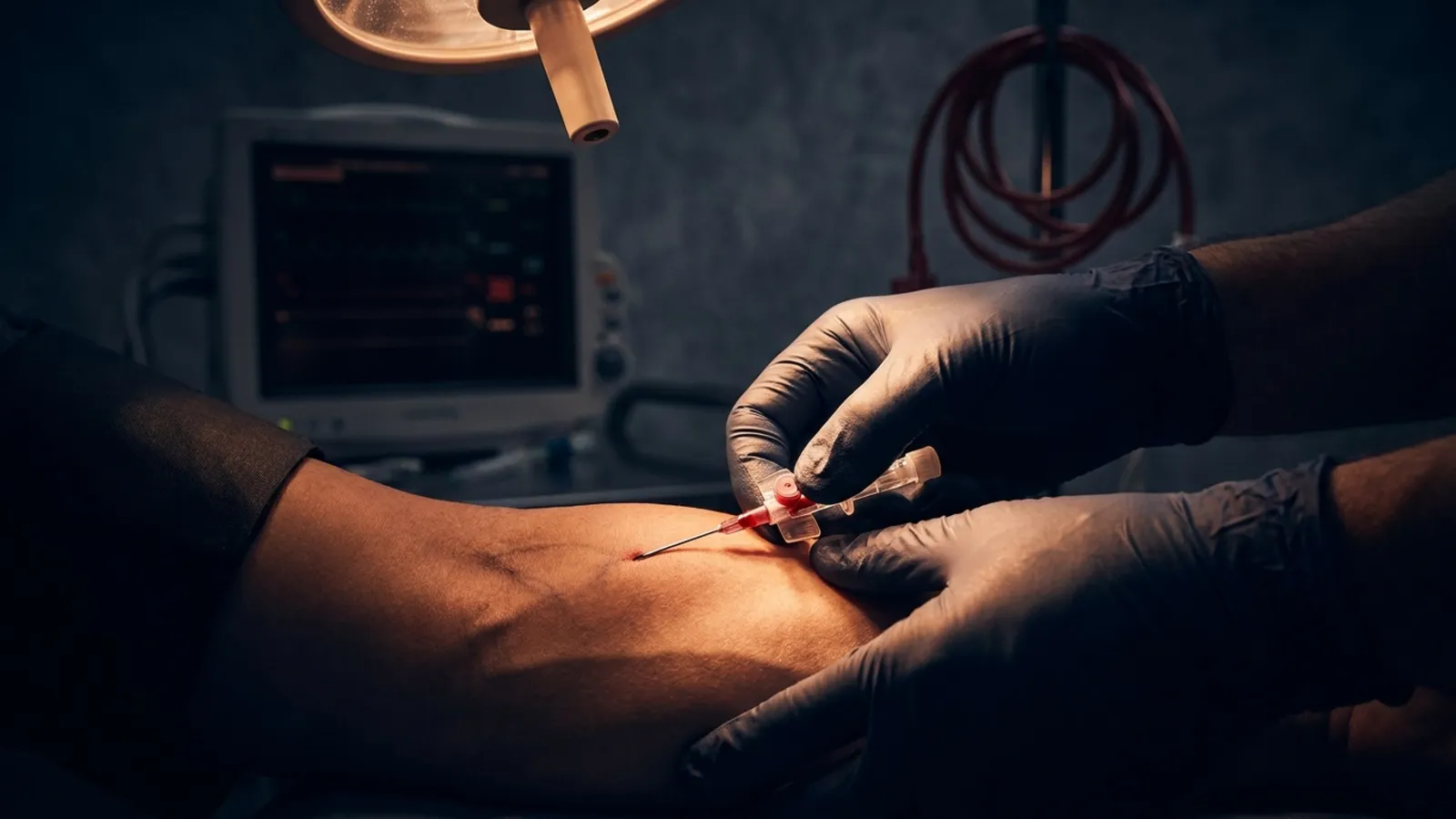
IV extravasation management is one of the highest-stakes clinical responses in infusion nursing. A vesicant has leaked into surrounding tissue. Tissue damage, blistering, and necrosis are on the table. Your next 5 minutes determine whether the patient walks away with a bruise or a surgical consult.
This is the bedside protocol. It covers the immediate response sequence, vesicant classification and antidote selection per the ONS/ASCO 2025 guideline, the cold-versus-warm compress decision that catches most nurses off guard, documentation requirements, and the prevention principles that keep you from ever needing the protocol in the first place.
What is IV extravasation?
IV extravasation is the inadvertent leakage of a vesicant medication or solution from the vein into surrounding subcutaneous tissue, where the drug causes blistering, tissue damage, or necrosis. This distinguishes extravasation from infiltration, which is the leakage of a non-vesicant fluid that typically resolves with elevation and warmth without lasting injury.
The clinical implication of the distinction is large. According to the ASCO Post coverage of the 2025 ONS/ASCO collaborative guideline, vesicant extravasation occurs in roughly 0.1% to 6% of peripheral chemotherapy infusions and 0.3% to 4.7% of port infusions. Rare, but every infusion nurse will see one.
For the broader picture on infiltration recognition and management, see our guide on IV infiltration: signs, treatment, and prevention. The two complications look similar in the first minute. The treatment paths diverge sharply.
Why early recognition matters: the time window
Tissue damage from extravasation is time-dependent. IV extravasation management is fundamentally a race against ongoing cellular injury, because the vesicant continues to damage surrounding tissue until it is diluted, neutralized, or dispersed. Every minute the drug sits in tissue is more cellular damage.
The clinical response window:
- First 60 seconds. Stop the infusion. Do not pull the catheter. Aspirate residual drug.
- Minutes 1 to 5. Notify the team, identify the vesicant class, choose the antidote.
- Minutes 5 to 30. Antidote administration if indicated. Compress application begins.
- First 24 hours. Continued compresses, photography, documentation, surgical consult assessment.
- First 7 days. Daily reassessment, compress continuation per agent class, escalation if necrosis develops.
The patients who do best are the ones whose nurse acted fast and acted right. Hesitation costs tissue.
The first 5 minutes: immediate response protocol
The IV extravasation management protocol does not change based on which vesicant leaked. Execute these steps in order, every time:
- Stop the infusion immediately. The pump goes off, the line clamps closed.
- Do not pull the catheter. The catheter that delivered the leak is also your access for aspiration and possible antidote.
- Aspirate residual drug from the catheter. Per the ONS coverage of the 2025 extravasation guideline, use a 3 to 5 mL syringe and gently pull back. Even a small volume removed reduces the dose left in tissue.
- Aspirate from the extravasation site if blistering allows. If the area shows visible swelling and the drug class warrants, gentle subcutaneous aspiration with a small-gauge needle may be appropriate per institutional protocol.
- Mark the affected area with a skin pen. Outline the extravasation perimeter so progression can be tracked.
- Photograph the site immediately. Time-stamped photos with a ruler for scale, repeated at standard intervals. Documentation matters legally and clinically.
- Notify the prescribing provider, the oncology pharmacist, and the charge nurse. All three, every time. The pharmacist knows the antidote pathway. The provider orders it. The charge nurse coordinates the response.
- Identify the vesicant class. This determines antidote choice and compress type.
- Pull the catheter only after aspiration is complete and antidote pathway is decided. Some antidotes are administered through the existing catheter before removal.
- Elevate the affected limb. Reduces additional infiltration and supports lymphatic clearance.
The protocol is simple to remember and hard to execute calmly under pressure. We teach the underlying psychology of working under clinical stress at VeinCraft Academy because the right response in the first 60 seconds is half technique and half nervous system regulation.
Vesicant classes and their behavior in tissue
Vesicants fall into distinct chemical classes. The class determines what antidote works, what compress to apply, and how aggressive the surgical involvement should be.
| Class | Common Examples | Mechanism of Tissue Damage | Antidote |
|---|---|---|---|
| Anthracyclines | Doxorubicin, daunorubicin, epirubicin, idarubicin | DNA binding, prolonged tissue retention, progressive necrosis | Dexrazoxane |
| Vinca alkaloids | Vincristine, vinblastine, vinorelbine | Microtubule disruption, rapid spread | Hyaluronidase |
| Taxanes | Paclitaxel, docetaxel | Direct cytotoxicity, blistering | Hyaluronidase (with warm compress) |
| Alkylating agents | Mechlorethamine, bendamustine | DNA cross-linking, sustained damage | Sodium thiosulfate (high-dose cisplatin), DMSO topical |
| Platinum compounds | Cisplatin (>20 mL high concentration) | Direct cytotoxicity | Sodium thiosulfate |
| Antitumor antibiotics | Mitomycin C, mitoxantrone | Free radical generation, delayed necrosis | DMSO |
| Vasopressors | Norepinephrine, vasopressin, dopamine | Severe vasoconstriction, ischemic necrosis | Phentolamine, terbutaline |
For oncology-specific access decisions that prevent extravasation in the first place, see our guide on IV access in chemotherapy patients.
Antidote selection: the four oncology agents
The 2025 ONS/ASCO guideline identifies four primary antidotes for antineoplastic extravasation. Each works for a specific drug class, and the wrong antidote can worsen damage.
Dexrazoxane. The strongest evidence base. Dexrazoxane is the antidote of choice for anthracycline extravasation (doxorubicin, daunorubicin, epirubicin, idarubicin). Per the Drug Information Group at UIC, dexrazoxane is the only extravasation antidote studied in large multicenter prospective trials with objective extravasation diagnosis. Administered IV in a separate vein, started within 6 hours of extravasation, given for 3 days.
Hyaluronidase. Used for vinca alkaloid (vincristine, vinblastine, vinorelbine) and taxane (paclitaxel, docetaxel) extravasation. Injected subcutaneously in small aliquots around the extravasation perimeter. Promotes drug dispersion and absorption.
Dimethyl sulfoxide (DMSO). Topical agent for mitomycin C and mitoxantrone extravasation, and an alternative when dexrazoxane is unavailable for anthracycline extravasation. Applied every 6 to 8 hours for 7 to 14 days. Critical caution: DMSO and dexrazoxane should never be used together. The combination increases tissue damage.
Sodium thiosulfate. Indicated for high-volume (>20 mL), high-concentration (>0.5 mg/mL) cisplatin extravasation and bendamustine extravasation. Injected subcutaneously around the extravasation perimeter.
For non-oncology vesicants: Vasopressor extravasation (norepinephrine, vasopressin, dopamine) is treated with phentolamine local infiltration, terbutaline subcutaneous injection, or topical nitroglycerin per institutional protocol. The pathophysiology is ischemic necrosis from vasoconstriction, not chemical cytotoxicity, so the antidote pathway is different.
Cold vs warm compress: the decision that surprises nurses
The compress decision is not intuitive. Cold for some vesicants, warm for others, and the same answer applied to the wrong agent worsens the injury.
| Compress Type | Mechanism | Use For |
|---|---|---|
| Cold compress | Vasoconstriction, limits drug spread, reduces inflammation | Anthracyclines, alkylating agents, antimetabolites, mitomycin C, taxanes (without hyaluronidase), platinum compounds |
| Warm compress | Vasodilation, disperses drug, enhances clearance | Vinca alkaloids, etoposide, oxaliplatin, taxanes (when hyaluronidase is co-administered), vasopressors |
The 2025 ONS/ASCO guidance recommends compresses 3 to 4 times daily for 48 to 72 hours, not just the first 24 hours. Per the Oncology Nursing Society's published recommendations, shorter durations are associated with worse outcomes.
Bottom line: Cold limits, warm disperses. Match the compress to the agent's preferred management strategy, not to instinct.
Documentation requirements
Documentation is the third pillar of IV extravasation management, alongside the immediate response and the antidote pathway. It is medical, legal, and quality-improvement evidence. It does not get to be sloppy.
The required documentation set:
- Time of extravasation onset (estimated). First moment swelling, burning, or loss of return was noted.
- Time of infusion stop. When the pump went off.
- Vesicant name, dose, concentration, volume infused, and estimated extravasated volume.
- Catheter type, gauge, location, dwell time before extravasation.
- Patient symptoms. Pain, burning, swelling, color changes, numbness.
- Photographs. Time-stamped, with ruler scale, of the affected area at presentation and at standard intervals (immediate, 24 hours, 48 hours, 7 days, 14 days).
- Antidote administered. Drug, dose, route, time, who administered it.
- Compress type and frequency.
- Notifications made. Provider, pharmacist, charge nurse, plastic surgery if consulted.
- Patient education provided. What to watch for, when to return, follow-up plan.
For the broader documentation framework around peripheral catheter complications, see our guide on blown veins, causes, and prevention.
When to escalate to plastic surgery
Most extravasation events resolve without surgical intervention if the antidote and compress protocol are followed correctly. The signals that warrant a plastic surgery consult:
- Visible blistering or ulceration within 24 hours. Early skin breakdown indicates progressive necrosis.
- Anthracycline extravasation with delayed dexrazoxane administration. If dexrazoxane was not given within 6 hours, surgical assessment is appropriate even if the site looks unimpressive at 24 hours.
- Pain that worsens after antidote and compress. Persistent pain at 48 to 72 hours suggests deep tissue damage.
- Loss of function in the affected extremity. Inability to flex fingers, reduced range of motion, or sensory changes warrant immediate surgical evaluation.
- Eschar formation. Black or dark brown tissue at the site means necrosis is established. Debridement may be required.
The MD Anderson extravasation management algorithm provides a useful clinical reference for the surgical escalation decision.
Prevention: how to never need this protocol
Every extravasation event begins with an IV access decision. The prevention principles that keep you out of the antidote conversation:
- Confirm blood return before every vesicant infusion. Brisk, dark blood return is the only proof the catheter tip sits in the vein lumen.
- Confirm a free saline flush. No resistance, no swelling, no patient complaint of burning.
- Use a fresh PIV for every vesicant. A peripheral IV more than 24 hours old has elevated extravasation risk. Do not run vesicants through aged lines.
- Use the largest, most stable vein available. The dorsal hand and small forearm veins are not appropriate for vesicant infusion if a larger forearm or antecubital vein is usable.
- Use central access for continuous vesicant infusions. Per current guidance, true vesicants given as continuous infusions or in therapeutic doses require central access, not peripheral.
- Monitor blood return throughout administration. Check return every 2 to 3 mL with peripheral push and at least every few minutes with central access.
- Stop at the first sign of trouble. Burning, swelling, loss of return, patient discomfort. Stop, assess, treat as extravasation until proven otherwise.
For oncology vascular access decisions that prevent extravasation through better device selection, see our guide on IV access in chemotherapy patients and the related midline vs PIV decision guide.
How VeinCraft trains for vesicant safety and IV extravasation management
Level 2: The Craft covers vesicant safety, blood return verification, and the clinical judgment behind IV extravasation management. Students practice on patients with difficult vascular anatomy under the observation of credentialed clinical instructors with active field experience. Mastery-based progression means you advance when you demonstrate the technique that prevents extravasation, not just the protocol for managing it.
If you are new to IV cannulation, start with Level 1: The Method at $199. The 8-hour intensive builds the foundation that makes Level 2 productive. The bundle (Master the Craft) at $449 saves $49 and includes a free practice kit. Enroll in the next cohort when you are ready to be the nurse who never has to call for the dexrazoxane order.
Frequently asked questions
What is the first thing to do for IV extravasation?
The first thing to do for IV extravasation is stop the infusion immediately, then aspirate residual drug from the catheter without removing it. Do not pull the catheter until aspiration is complete and the antidote pathway is decided, because the catheter that delivered the vesicant is also your route for possible antidote administration. Notify the prescribing provider, oncology pharmacist, and charge nurse simultaneously.
What is the difference between IV infiltration and extravasation?
IV infiltration is the leak of non-vesicant fluid into surrounding tissue, typically resolved with elevation and warm compress. IV extravasation is the leak of a vesicant agent that causes blistering, tissue damage, and potentially necrosis. Extravasation requires the institution's antidote protocol, photographic documentation, and provider notification, while uncomplicated infiltration can often be managed at the bedside.
Should I use a cold or warm compress for extravasation?
Cold compresses are used for anthracyclines, alkylating agents, antimetabolites, taxanes (without hyaluronidase), and platinum compounds because they vasoconstrict and limit drug spread. Warm compresses are used for vinca alkaloids, etoposide, oxaliplatin, taxanes (when co-administered with hyaluronidase), and vasopressor extravasation because they vasodilate and disperse the drug. Match the compress to the specific vesicant, not to instinct.
When should dexrazoxane be given for anthracycline extravasation?
Dexrazoxane should be given within 6 hours of anthracycline extravasation for maximum effectiveness, with treatment continued for 3 days. Dexrazoxane is administered IV in a separate vein from the extravasation site. It is the antidote of choice for doxorubicin, daunorubicin, epirubicin, and idarubicin extravasation. Critical caution: dexrazoxane and DMSO should never be used together because the combination increases tissue damage.
Can extravasation cause permanent damage?
Yes, IV extravasation can cause permanent tissue damage including necrosis, scarring, loss of function, and in severe cases the need for surgical debridement, skin grafting, or amputation. Outcomes depend on the vesicant class, the volume extravasated, the time to recognition, and the appropriateness of the immediate response. Prompt application of the IV extravasation management protocol significantly reduces the likelihood of permanent injury.
How do I prevent IV extravasation in the first place?
Prevent IV extravasation by confirming brisk blood return before every vesicant infusion, using a fresh PIV (less than 24 hours old) in the largest stable vein available, monitoring blood return throughout administration, and using central access for continuous vesicant infusions. Stop at the first sign of burning, swelling, or loss of return rather than continuing the infusion. Most extravasation events trace back to access decisions that could have been made differently.
VeinCraft Academy is a mastery-focused IV cannulation training program for healthcare professionals. All instruction is delivered by credentialed clinicians with active field experience. VeinCraft Academy is a RevivaGo Company.