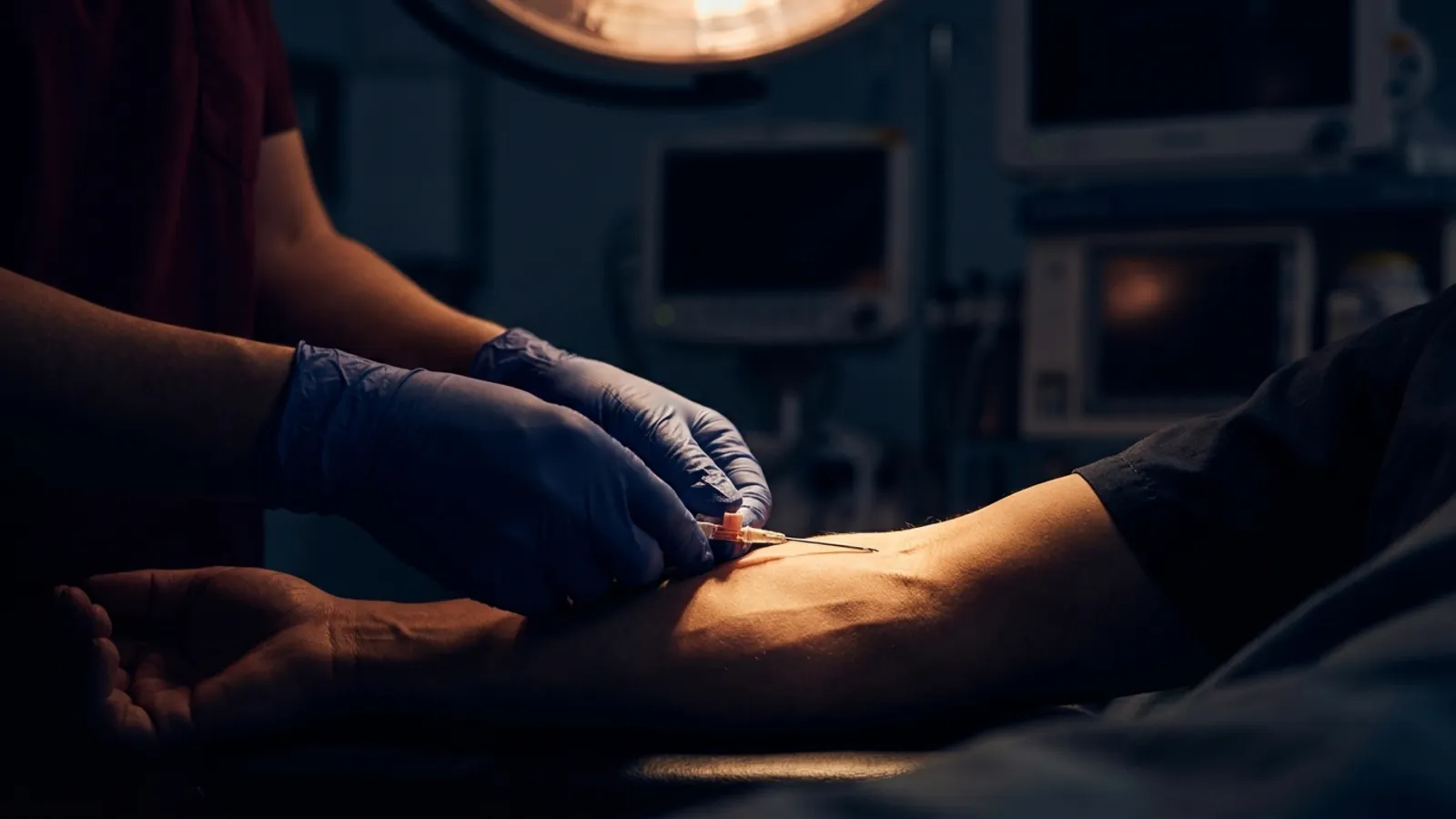
IV infiltration occurs when intravenous fluid or non-vesicant medication leaks from the vein into surrounding subcutaneous tissue, typically due to catheter dislodgement, vein wall damage, or improper placement. According to a meta-analysis published in the Journal of Clinical Nursing, infiltration affects approximately 24% of all peripheral IV catheters, making it the single most common IV complication in clinical practice.
If you start IVs regularly, you will deal with infiltration. The question is not whether it happens, but how quickly you recognize it, how effectively you respond, and whether your insertion technique reduces the likelihood in the first place.
What is IV infiltration?
IV infiltration is the inadvertent leakage of non-vesicant fluid or medication from the intended vein into surrounding tissue. The Infusion Nurses Society (INS) defines it specifically as the inadvertent administration of a nonvesicant solution or medication into the subcutaneous tissue.
The key word is "nonvesicant." When the leaking fluid is a vesicant, a chemical agent capable of causing tissue blistering and necrosis, the complication is called extravasation, not infiltration. The distinction matters because extravasation carries significantly higher risk of permanent tissue damage and requires different treatment protocols.
Common causes include catheter tip puncturing through the opposite vein wall during insertion, gradual catheter migration out of the vein lumen due to patient movement or poor securement, and vein wall fragility in elderly, dehydrated, or chronically ill patients.
Signs and symptoms of IV infiltration
Early recognition prevents progression. The sooner you catch infiltration, the less tissue damage occurs.
Early signs:
- Swelling or puffiness at or near the IV site
- Skin tightness around the catheter
- Slowed or stopped infusion rate without an obvious occlusion
- Patient reports discomfort, stinging, or burning at the site
Progressive signs:
- Blanched or cool skin around the insertion site
- Firm or hard tissue on palpation
- Leaking fluid around the catheter entry point
- Absence of blood return when the line is aspirated
- Visible edema extending beyond the immediate insertion area
Not every infiltration announces itself dramatically. Patients with altered sensation from diabetes or neuropathy may not report pain even as fluid accumulates in the tissue. This is why regular site assessment matters more than relying on patient complaints alone.
The INS infiltration grading scale
The Infusion Nurses Society Infiltration Scale provides a standardized framework for assessing severity. Using a consistent grading system ensures clear communication between providers and guides treatment decisions.
| Grade | Signs and Symptoms | Action |
|---|---|---|
| 0 | No symptoms | Continue monitoring |
| 1 | Skin blanched, edema less than 1 inch, cool to touch, with or without pain | Stop infusion, remove catheter, elevate, apply compress, restart at new site |
| 2 | Skin blanched, edema 1 to 6 inches, cool to touch, with or without pain | Stop infusion, remove catheter, elevate, compress, document, notify provider |
| 3 | Skin blanched and translucent, gross edema greater than 6 inches, cool to touch, mild to moderate pain, possible numbness | Stop infusion, remove catheter, elevate, compress, notify provider immediately, monitor for compartment syndrome |
| 4 | Skin blanched and translucent, tight, leaking, discolored, bruised, swollen, gross edema greater than 6 inches, deep pitting edema, circulatory impairment, moderate to severe pain | Stop infusion, remove catheter, emergency intervention, potential surgical consult |
Grade 3 and 4 infiltrations require immediate medical attention. A Grade 4 infiltration, particularly in a neonate or in a confined tissue compartment like the hand or forearm, can progress to compartment syndrome if not addressed quickly.
How to treat IV infiltration
When you identify infiltration, act methodically. Rushing through the response or skipping documentation creates problems downstream.
Stop the infusion immediately. Clamp the line. Do not flush the catheter in an attempt to restore flow, as this pushes more fluid into the tissue.
Disconnect and aspirate. Before removing the catheter, attempt to aspirate any residual fluid from the tissue through the catheter. This is especially important if the infused solution has a high osmolarity.
Remove the catheter. Withdraw gently and apply pressure with sterile gauze. Do not massage the site.
Elevate the affected extremity. Position the limb above heart level to promote fluid reabsorption and reduce swelling.
Apply a compress. For most non-vesicant infiltrations, warm compresses promote vasodilation and fluid absorption. Apply for 20 minutes, two to three times daily. Cold compresses are indicated when the infiltrated solution is a vasoconstrictor or when swelling is the primary concern. Follow your facility's protocol.
Assess and grade. Use the INS Infiltration Scale to document severity. Measure the area of edema. Note skin color, temperature, and patient-reported pain level.
Restart at a new site. Choose a location proximal to the infiltrated site on a different extremity when possible. Restarting distal to an infiltration on the same vein risks leakage through the damaged vessel wall.
Document thoroughly. Record the time of discovery, grade, interventions taken, and patient response. Notify the provider for Grade 2 or higher.
Why IV infiltration happens
Infiltration is not random bad luck. A 2021 analysis of 11,830 peripheral IV catheters published in the Journal of Advanced Nursing found that overall catheter failure occurred in 36% of cases, with occlusion and infiltration accounting for 23% of all failures. Understanding the drivers helps you prevent them.
Mechanical causes:
- Catheter dislodgement from patient movement, inadequate securement, or accidental tugging on the line
- Catheter tip migration through the vein wall over time, especially during prolonged dwell times
- Vein wall erosion from rigid catheter material or high-flow infusions
Technique-related causes:
- Through-and-through puncture during insertion, where the needle enters the vein but exits through the opposite wall
- Selecting a catheter gauge too large for the vein diameter, which damages the vessel wall
- Choosing a high-risk insertion site, such as areas of flexion where movement increases catheter migration
Provider-related causes:
This is the part most clinical references leave out. When you are rushed, anxious, or working under pressure, your fine motor control degrades. Your hands are less steady. Your site assessment becomes cursory instead of thorough. You skip the step where you properly evaluate the vein before committing, or you force a catheter into a marginal site because you feel pressure to get the line in quickly.
According to a 2023 study in the Journal of PeriAnesthesia Nursing, 80.4% of nursing students report significant anxiety during IV interventions. That anxiety does not disappear with experience if it is never addressed directly. Providers who learn to manage their central nervous system under clinical pressure make fewer technique errors, which translates directly to fewer complications like infiltration.
How to prevent IV infiltration
Prevention starts before you open the catheter packaging. The Infusion Nurses Society Standards of Practice (2024 edition) provide evidence-based guidelines that, when followed consistently, reduce infiltration rates significantly.
Select the right site. The forearm is the preferred location for peripheral IV insertion. Veins here are stabilized by the underlying bones, reducing catheter migration from arm movement. Avoid the hand, wrist, and antecubital fossa when possible, as these areas carry higher complication rates due to flexion and movement. For a deeper look at how site selection and vein assessment interact, see our guide on IV cannulation training fundamentals.
Choose the smallest effective catheter. The INS recommends using the smallest-gauge catheter that will accommodate the prescribed therapy. A 20-gauge catheter handles most adult infusions. Using a larger catheter than necessary increases vein trauma and infiltration risk.
Limit insertion attempts. The INS Standards recommend restricting peripheral IV insertion to two attempts per clinician. If two attempts fail, hand off to a provider with more experience or consider ultrasound-guided IV access. Repeated attempts on the same patient damage veins and increase complication risk.
Secure the catheter properly. A well-anchored catheter resists the small movements and tugs that gradually work the tip out of the vein lumen. Use a manufactured securement device or transparent dressing per your facility protocol. Make sure the hub is stabilized and the tubing has a stress loop.
Assess regularly. Check the IV site at least every 1 to 2 hours for signs of infiltration. For patients receiving high-risk infusions, vesicants, or patients in pediatric or elderly populations, assess more frequently. Do not rely on pump alarms alone. Many infiltrations develop slowly without triggering pressure changes.
Build your technique foundation. Providers with structured cannulation training have lower complication rates because their technique is more consistent. Proper insertion angle, appropriate skin traction, smooth catheter advancement, and accurate flash recognition all reduce vein wall trauma during the critical moment of access. Programs like VeinCraft Academy's Level 1: The Method build these fundamentals through supervised live-patient practice, not simulation alone, so the technique holds up under real clinical conditions.
When infiltration becomes something more: extravasation
The line between infiltration and extravasation is defined by the solution leaving the vein. If it is a non-vesicant, it is infiltration. If it is a vesicant or cytotoxic agent, it is extravasation, and the clinical stakes rise considerably.
| Factor | Infiltration | Extravasation |
|---|---|---|
| Solution type | Non-vesicant fluids (normal saline, lactated Ringer's, most antibiotics) | Vesicant agents (chemotherapy drugs, vasopressors, calcium chloride, hypertonic solutions) |
| Tissue damage risk | Typically mild to moderate; resolves with elevation and compresses | Can cause blistering, tissue necrosis, and permanent damage |
| Treatment urgency | Prompt but generally managed at the bedside | Urgent; may require antidotes, surgical consult, or plastic surgery referral |
| Grading | INS Infiltration Scale (0-4) | Separate extravasation scale focused on tissue destruction |
If you are administering a vesicant medication and notice any signs of leakage, stop the infusion immediately and follow your facility's extravasation protocol. For certain chemotherapy agents, specific antidotes (such as dexrazoxane for anthracycline extravasation or hyaluronidase for vinca alkaloid extravasation) must be administered within a narrow time window to prevent tissue necrosis.
Understanding the difference between these two complications is a core competency in IV therapy. If you work with difficult venous access patients, building advanced assessment skills reduces both infiltration and extravasation events.
How do you know if an IV has infiltrated?
The most reliable early indicator is swelling at or near the IV site that was not present when the catheter was placed. Check for skin tightness, coolness, pallor, and a slowed infusion rate. Compare the IV site to the same location on the opposite extremity. If you suspect infiltration, aspirate the line. Absent blood return combined with visible swelling confirms the catheter is no longer in the vein.
What is the difference between IV infiltration and extravasation?
Infiltration involves the leakage of non-vesicant fluids into surrounding tissue. Extravasation involves the leakage of vesicant or cytotoxic agents that can cause blistering, tissue necrosis, and permanent damage. Both start the same way, with a catheter no longer properly seated in the vein. The difference is what flows through that catheter. Treatment protocols diverge significantly, with extravasation requiring urgent intervention and potentially antidote administration.
Can IV infiltration cause permanent damage?
Most infiltrations, particularly Grade 1 and Grade 2, resolve without lasting effects once the infusion is stopped and basic treatment is applied. However, severe infiltrations (Grade 3 and 4) can cause compartment syndrome, nerve compression, and tissue necrosis, particularly in neonates and in confined tissue compartments. According to a 2022 review in the Annals of Plastic Surgery, peripheral IV infiltration injuries requiring surgical intervention are most common in neonatal and pediatric populations where tissue tolerance for fluid accumulation is lower.
How often should you check an IV site for infiltration?
The INS Standards of Practice recommend assessing peripheral IV sites at minimum every 1 to 2 hours for adult patients. For pediatric patients, patients receiving vesicant infusions, or patients with altered sensation, assess every 30 to 60 minutes. Many facilities have policies that specify check intervals based on infusion type and patient risk factors. Consistent assessment is the single most effective prevention strategy.
The best defense against infiltration is not just knowing how to treat it, but building the cannulation technique and site assessment habits that reduce it from the start. If you want to strengthen your IV fundamentals through hands-on training with live patients, explore VeinCraft Academy's course offerings and find out why mastery-based progression, starting at $199, builds confidence that lasts beyond the classroom.
VeinCraft Academy is a mastery-focused IV cannulation training program for healthcare professionals. All instruction is delivered by credentialed clinicians with active field experience. VeinCraft Academy is a RevivaGo Company.