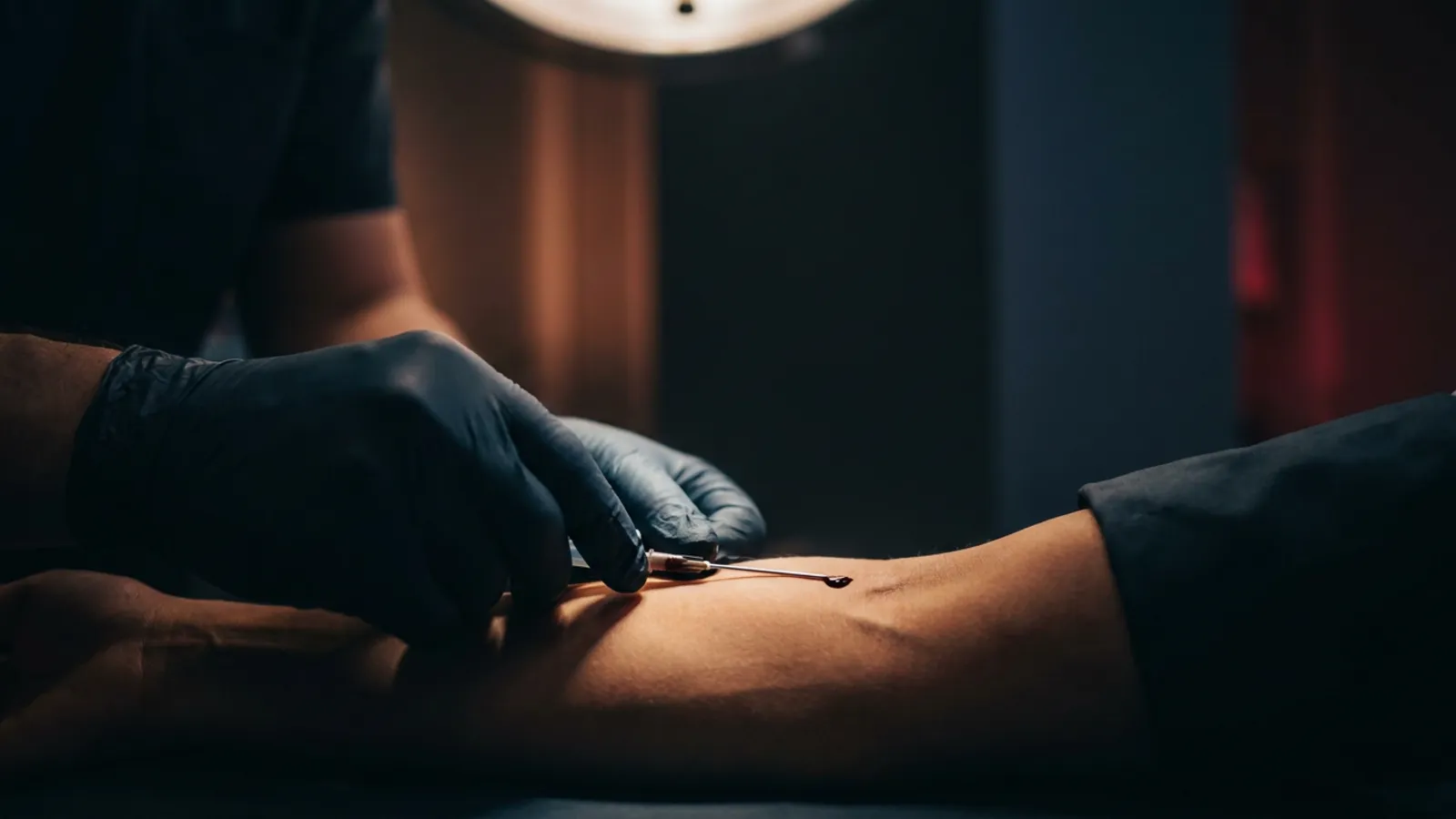
IV skill decay is the quiet career problem nobody discusses until it shows up in front of a colleague who used to escalate to you. Six months on a unit with low IV volume, three months of FMLA leave, a transfer to a department where the techs start the lines, and the muscle memory you spent years building begins to evaporate. The miss feels personal. The cause is biological. Skills atrophy without use, and IV cannulation is no exception.
This guide is the maintenance manual. It covers what the research actually says about how fast clinical skills decay, the IV-specific timeline most providers do not see coming, who is at highest risk, the deliberate practice protocol that prevents decay, and how to rebuild confidence after a missed-stick streak that shook it.
What is IV skill decay?
IV skill decay is the gradual loss of cannulation proficiency that occurs when a clinician stops performing IV starts at the volume and frequency that built the skill in the first place. The decline is silent. Confidence remains stable for weeks while underlying motor precision and visual-tactile integration drift. The first miss after a long pause is not an accident. It is the surface signal of a slow loss.
According to research published in Bowling Green State University's nursing scholarship on psychomotor skill retention, skill loss from non-use ranges from minimal immediately after training to substantial after more than 365 days of non-practice. IV cannulation falls into the category of accuracy-based motor skills, which decay faster than physical or speed-based skills.
For the related question of how much practice is required to build the skill in the first place, see our guide on how many IV sticks to become proficient.
The research: how fast clinical skills decay
Healthcare procedural skills follow a predictable decay curve. The relevant research:
- CPR skills decay within 6 to 12 months of formal basic life support training, with measurable degradation in compression depth, rate, and recoil even in providers who passed certification a year earlier.
- Pediatric CPR skills decay within months after training, fast enough that current biennial recertification intervals are demonstrably inadequate.
- Procedural motor skills decay faster than cognitive skills. You forget how to do the procedure before you forget what the procedure is for.
- Refresher training intervals should not exceed 7 months for high-stakes procedural skills, per the REF-CPR psychomotor retention study published in PMC.
- Low-dose, high-frequency refresher training outperforms infrequent intensive retraining. Two minutes of practice every month produced better retention than a half-day annual refresher.
The pattern is consistent across procedural domains. The skills you do not use, you lose, and the timeline is shorter than most providers realize.
The IV-specific skill decay timeline
IV cannulation does not have published decay curves as detailed as CPR research, but the analog applies. Drawing on the journal Nursing Education research on deliberate practice and motor skill learning and observed clinical patterns:
| Time Without Regular IV Starts | Likely Skill State |
|---|---|
| 0 to 30 days | Minimal decay. Performance essentially unchanged. |
| 30 to 90 days | Subtle decay. First-stick success drops 5 to 15%. Most providers do not notice. |
| 90 to 180 days | Measurable decay. First-stick success drops 15 to 30%. Confidence often still high, which is the dangerous gap. |
| 180 to 365 days | Significant decay. First-stick success may drop 30 to 50%. Hesitation returns. Difficult-access patients become harder. |
| Over 365 days | Substantial decay. Performance approaches that of a new graduate. Confidence collapses after the first or second miss. |
The timeline accelerates if the provider was not at mastery level when they stopped. A nurse who had done 50 sticks decays faster than a nurse who had done 500. Foundation depth matters.
Who is most at risk for IV skill decay
The patterns in the units where decay is most pronounced:
- Nurses returning from leave. FMLA, parental leave, medical leave, sabbatical. Three to twelve months away from clinical practice produces noticeable skill loss.
- Nurses transferring between units. Med-surg to outpatient clinic, ICU to administration, hospital to school nursing. Lower IV volume in the new role accelerates decay.
- Newer graduates between high-acuity rotations. Building skill during one rotation and then losing it during the next.
- Providers in IV team or vascular access models. Bedside nurses on units where a dedicated team starts all IVs lose practice volume quickly.
- Mobile IV providers in slow seasons. Solo operators with seasonal volume swings see decay during low-booking months.
- Per diem and float staff. Inconsistent assignments mean inconsistent practice. Some weeks are heavy IV days; some weeks are zero.
- Educators and managers reducing patient care time. Clinical leaders who shift to administrative roles often retain title but not skills.
The signs you are decaying
Self-assessment of skill decay is hard because confidence often holds while underlying competence drifts. The signals that should prompt deliberate refresher work:
- You hesitate before approaching a difficult vein. Hesitation is a behavioral marker that confidence is no longer matching skill.
- You miss the first stick on a patient who used to be easy. The patient profile has not changed; your hands have.
- Your hands shake or sweat during routine procedures. Sympathetic activation returning suggests subconscious recognition that performance is not automatic.
- You look for excuses to defer to a colleague. "I have a charting backlog, can you grab that line?" is a quiet symptom.
- You blow more veins than usual during catheter advance. Often a tourniquet release timing problem that surfaces when motor sequencing is rusty. See our IV tourniquet techniques guide for the underlying mechanics.
- You feel surprised by anatomy you used to predict. "I thought that was a clear path" is a sign the visual-tactile integration is rebuilding.
- Your colleagues stop asking for your help on hard sticks. The unit notices skill loss before the provider does. This is the most painful signal and the most reliable.
The deliberate practice antidote
The research consensus across nursing, medicine, and procedural training is consistent: deliberate practice prevents and reverses skill decay. The principles:
- Practice must be intentional, not accidental. Starting one IV during a busy shift does not maintain the skill. Doing five IVs with attention to specific technique elements does.
- Practice must include feedback. A miss without analysis is just a miss. A miss with reflection on tourniquet pressure, insertion angle, and flash recognition is a learning event.
- Practice must include difficult cases. Easy sticks maintain the floor of competence. Hard sticks expand the ceiling. A provider who only does easy IVs loses the difficult-access skills first.
- Practice frequency beats practice volume. Five sticks per week for 4 weeks builds more retention than 20 sticks in a single shift.
- Practice must be progressively challenging. Comfortable practice does not produce growth. The patients who teach you the most are the ones who scared you.
For the broader psychology of IV practice and the mental game that underlies technique, see our psychology of IV insertion guide.
Practice intervals: how often, how much
The cadence that maintains IV cannulation competence:
| Risk Profile | Recommended Practice Cadence |
|---|---|
| High-volume bedside (5+ starts per week) | Practice happens organically. No supplemental refresher required. |
| Moderate-volume bedside (1 to 4 starts per week) | Maintain. Add monthly difficult-access practice for retention of advanced skills. |
| Low-volume clinical (less than 1 start per week) | Monthly Stick Lab or simulation practice. Quarterly difficult-access focus. |
| Returning from leave (3 to 6 months out) | Pre-return refresher session before first patient encounter. Daily practice for first two weeks back. |
| Returning from extended leave (6+ months out) | Full refresher course recommended. Supervised practice on first 10 to 20 patient sticks. |
| New role transition (clinical to admin) | Quarterly Stick Lab to maintain. Annual refresher to extend competence horizon. |
The principle from CPR research applies directly: short, frequent practice outperforms long, infrequent retraining. A 30-minute Stick Lab session monthly maintains IV skill better than an 8-hour annual workshop.
Where to practice when patients are not available
The practical question for low-volume providers and those between rotations is where to practice. The hierarchy:
- Live patient sticks under supervision. Always the gold standard. If you have access to volunteer patients in a clinical training setting, use it.
- Stick Lab sessions. Drop-in practice with peers and instructor available. VeinCraft Academy offers Stick Lab at $35 per session for graduates as the standard maintenance pathway.
- Simulation arms with instructor feedback. Higher fidelity than home practice, lower realism than live sticks. Best when paired with feedback on technique elements.
- Home practice with a quality simulation arm. A practice kit with a realistic arm allows muscle memory drills, tourniquet timing practice, and flash recognition rehearsal. Useful between live sessions.
- Mental rehearsal and visualization. When physical practice is impossible, structured mental rehearsal of the procedure (site selection, tourniquet placement, insertion sequence) maintains some neural pathways.
- Video review and case study. Watching expert technique videos and analyzing your own recorded performance refines visual-tactile integration when physical practice is limited.
For new graduates building the foundation that resists decay later, see our guide on new grad nurse IV confidence.
Rebuilding after a missed-stick streak
The hardest part of IV skill decay is the psychological aftermath of recognizing it. The first miss in front of a colleague who used to escalate to you is a small career trauma. The second miss the next shift starts a confidence spiral. By the third miss, the provider is questioning their identity as a competent clinician.
The rebuild protocol:
- Name the cause. Decay, not character. The skill atrophied because of biology, not because you stopped being good at your job.
- Reduce the stakes immediately. Volunteer for low-acuity IV starts where the patient profile is favorable. Rebuild floor competence before re-engaging difficult access.
- Schedule deliberate practice within 7 days. Stick Lab, simulation, supervised live sticks. Do not wait for a "better time."
- Track success rate honestly. First-stick success per week. Watch the trend, not the individual data points.
- Address the anxiety component. Skill decay often coincides with anxiety amplification. The mental game requires its own attention. See our guide on IV insertion anxiety.
- Set a 30-day rebuild target. Most decay reverses within 30 days of consistent deliberate practice. The skill rebuilds faster than it decayed because the underlying patterns are still in your motor cortex; they need reactivation.
How VeinCraft trains for IV skill decay prevention and recovery
The model VeinCraft Academy uses is built around the research consensus on skill maintenance. Level 1: The Method at $199 builds the foundation deep enough to resist rapid decay. Level 2: The Craft at $299 extends competence into difficult-access territory that maintains motivation to keep practicing.
The structural answer to skill decay is Stick Lab access. Graduates can return for $35 drop-in practice sessions to maintain competence between clinical opportunities. The combination of deep initial training and accessible ongoing practice prevents the silent decay that produces the painful missed sticks.
The bundle (Master the Craft) at $449 saves $49 and includes a free practice kit for at-home maintenance. Enroll in the next cohort when you are ready to build a foundation that survives the slow seasons. For broader career context, see our guide on nurse career advancement through IV skills.
Frequently asked questions
How fast does IV skill decay happen?
IV skill decay is measurable within 30 to 90 days of stopping regular practice, with first-stick success dropping 5 to 15% in this window. By 180 days without regular IV starts, decay reaches 15 to 30%, and by 365 days it can approach 30 to 50%. Decay accelerates faster in providers who never reached deep competence in the first place. The timeline mirrors what is documented in CPR retention research.
Can I prevent IV skill decay if I am not starting IVs regularly?
Yes, IV skill decay can be prevented through deliberate practice with appropriate frequency. Low-volume providers benefit most from monthly Stick Lab sessions or supervised simulation practice with feedback. Brief frequent practice (30 minutes monthly) outperforms infrequent intensive refresher courses. Home practice with a quality simulation arm extends maintenance between supervised sessions.
How often should I refresh my IV cannulation skills?
Refresh IV cannulation skills monthly if you are starting fewer than 1 IV per week in your current role. Quarterly refreshers are appropriate if you start 1 to 4 IVs per week and want to maintain difficult-access competence. Providers returning from leave longer than 6 months benefit from a full refresher course before the first patient encounter, with supervised practice on the first 10 to 20 sticks back.
Do I lose IV skills permanently if I stop practicing for a year?
No, you do not lose IV skills permanently. Skills decay substantially after 365 days of non-use, but the underlying motor patterns remain in the motor cortex and reactivate with deliberate practice. Most providers rebuild lost competence within 30 days of consistent practice, faster than the original learning curve. The challenge is psychological as much as physical: the missed sticks during decay often shake confidence more than they shake skill.
What is the best way to maintain IV skills as a mobile IV provider during slow seasons?
Maintain IV skills during slow mobile IV seasons through structured Stick Lab participation, simulation practice with realistic feedback, and deliberate volunteer work in clinical settings if available. Mobile providers should track personal first-stick success rates as a leading indicator of skill state. A drop in success during slow months is the signal to add supplemental practice before the next high-volume period exposes the gap.
How do I rebuild confidence after missing several IV starts in a row?
Rebuild confidence after missed IV starts by separating IV skill decay from personal character, scheduling deliberate practice within 7 days, and accepting low-acuity starts to rebuild the floor of competence before re-engaging difficult access. Track first-stick success rate weekly to watch the trend. Most decay reverses within 30 days of consistent practice. The psychological recovery often takes longer than the technical recovery and benefits from addressing IV insertion anxiety directly.
VeinCraft Academy is a mastery-focused IV cannulation training program for healthcare professionals. All instruction is delivered by credentialed clinicians with active field experience. VeinCraft Academy is a RevivaGo Company.